
Crime & Conflict
Western Marine Customs Strengthens Maritime Border Security, Intercepts ₦157.8m Cannabis Shipment


The Nigeria Customs Service (NCS), Western Marine Command, has recorded a significant operational breakthrough in its ongoing efforts to safeguard Nigeria’s maritime borders, intercepting a large consignment of illicit drugs suspected to have been smuggled through the nation’s waterways.
The seizure, which underscores renewed enforcement intensity across coastal routes, involved 20 sacks of Cannabis Indica, carefully concealed and packaged into 1,205 individual wraps, with an estimated street value of ₦157.83 million.
Details of the Interception
Addressing journalists at the Command’s headquarters on Wednesday, 14 January 2025, the Customs Area Controller (CAC), Comptroller Patrick Ntadi, confirmed the interception and described it as a product of enhanced intelligence-led operations and inter-agency cooperation.
According to Comptroller Ntadi, preliminary findings indicate that the illicit drugs were unlawfully smuggled into Nigeria through maritime routes, exploiting the vast and often challenging coastal terrain.
“The drugs were carefully packed and concealed in a manner consistent with organised smuggling operations. Our officers, acting on credible intelligence, intercepted the consignment before it could enter the domestic distribution chain,” Ntadi stated.
Boosted Intelligence and Operational Capacity
The Customs boss attributed the success of the operation to:
- Improved intelligence gathering
- Enhanced patrol coordination
- Increased motivation among officers
- Strong leadership support from the Comptroller-General of Customs
He specifically commended the Comptroller-General of Customs, Adewale Adeniyi, for prioritising logistics, capacity building, and operational readiness across maritime commands.
“The Comptroller-General is reaching everywhere to ensure that our operations are handled efficiently. His support has been instrumental in strengthening our enforcement capacity,” Ntadi noted.
Deployment of New Patrol Boats to Enhance Sea Operations
In a major boost to maritime enforcement, Comptroller Ntadi announced that the Western Marine Command is set to receive seven brand-new patrol boats within the month.
He explained that the additional assets would significantly improve:
- Offshore patrol coverage
- Response time to intelligence reports
- Deterrence against smuggling networks
“This January, we will be taking delivery of seven new boats. When they arrive, we will intensify our presence at sea. We will be more efficient, more effective, and better positioned to achieve our operational goals,” he said.
Security analysts say the deployment of modern patrol vessels is critical, given the increasing use of waterways by transnational criminal networks involved in drug trafficking, arms smuggling, and other contraband activities.
Commitment to Trade Facilitation and Transparency
Beyond enforcement, the Western Marine Command also highlighted its role in facilitating legitimate trade and ensuring transparency within the port system.
According to Comptroller Ntadi, the Container Seat team under the command successfully escorted 21,414 containers from the main ports to various bonded terminals.
He said the initiative was designed to:
- Prevent cargo diversion
- Ensure compliance with customs regulations
- Promote transparency in cargo movement
- Reduce bottlenecks in port operations
“Our responsibility goes beyond enforcement. Trade facilitation is a core mandate of the Nigeria Customs Service, and we remain committed to ensuring smooth, transparent movement of legitimate goods,” Ntadi stated.
Inter-Agency Collaboration with NDLEA
Following established procedures, the seized cannabis consignment was formally handed over to the National Drug Law Enforcement Agency (NDLEA) for further investigation and prosecution.
Customs officials noted that such collaboration ensures:
- Proper forensic analysis
- Effective prosecution of offenders
- Disruption of drug distribution networks
The NDLEA is expected to expand investigations to trace the origin, financiers, and intended recipients of the illicit shipment.
Visit by Senior Customs Officers Reinforces Discipline
Earlier in the day, Comptroller Ntadi received senior Customs officers from Zone A, including:
- Comptroller Emmanuel Oshoba (Apapa Area Command)
- Comptroller Joe Anani (Port & Terminal Multi-Services Limited)
- Comptroller Frank Onyeka (Tin Can Island Port Command)
During the Command’s parade, the visiting officers addressed personnel, urging them to uphold the highest standards of professionalism, discipline, and integrity.
Emphasis on Professionalism and Institutional Values
Speaking to officers, Comptroller Emmanuel Oshoba stressed that professionalism remains the backbone of effective customs administration.
“Discipline is key. Building yourself up is key. Having foresight for the service is key. The only way for us to survive in this environment is to be very professional,” Oshoba said.
He reminded officers that their conduct directly impacts public trust, institutional credibility, and national security.
Maritime Routes Under Increased Scrutiny
Nigeria’s extensive coastline and interconnected waterways have long posed enforcement challenges, often exploited by criminal syndicates for smuggling illicit goods.
Security experts note that drug trafficking through maritime routes:
- Fuels organised crime
- Undermines public health
- Weakens border control systems
The latest interception, analysts say, signals a renewed commitment by Customs to close enforcement gaps along coastal corridors.
Customs Reaffirms Statutory Mandate
Concluding his address, Comptroller Ntadi reaffirmed the Western Marine Command’s dedication to its statutory responsibilities, which include:
- Revenue protection
- Border security
- Suppression of smuggling
- Facilitation of legitimate trade
“These operational achievements reaffirm our unwavering commitment to protecting Nigeria’s borders and ensuring that criminal elements do not exploit our maritime environment,” he said.
A Message of Deterrence
The interception sends a clear message to smuggling syndicates that Nigeria’s maritime borders are under increased surveillance and that enforcement capabilities are being strengthened.
For stakeholders, including port users and coastal communities, the operation represents a step forward in balancing security enforcement with trade facilitation, a core objective of modern customs administration.

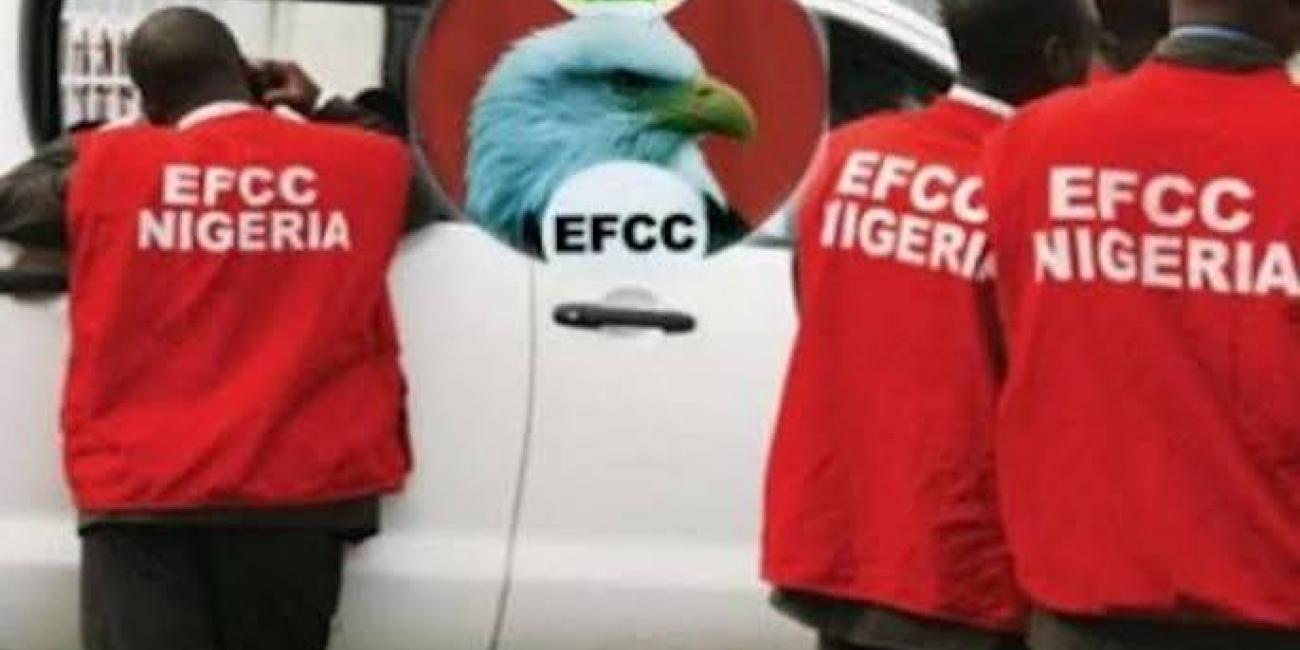
Lawyers Ask EFCC to Remove Photos of Clients Facing Corruption Charges
Lawyers representing two defendants facing corruption-related charges have asked the Economic and Financial Crimes Commission (EFCC) to remove their clients’ names and photographs from media publications linked to their ongoing criminal trial.
The lawyers argued that publishing the identities of the defendants in connection with the allegations could damage their reputations and create the impression that they had already been found guilty before the court reached a verdict.
The petition was submitted by J Aboje & Co., also known as Compass Chambers, on behalf of Folashade Oketope, a former chairwoman of the committee responsible for the sale of Federal Government houses in Abuja, and Mohammed Kabir Usman, a staff member of the Federal Capital Territory Administration (FCTA).
In a letter dated October 13, 2026, and addressed to the EFCC chairman, the law firm described the publications as an infringement on its clients’ constitutional rights, particularly the presumption of innocence and the right to dignity.
Lawyers Cite Presumption of Innocence
According to the petition, the letter followed an earlier correspondence dated July 28, 2026, concerning the publication of the defendants’ arraignment.
Oketope and Usman were arraigned before the Federal Capital Territory High Court in Jabi, Abuja, on July 13, 2026, on a three-count charge involving alleged conspiracy, breach of trust, corruption and the unlawful sale of government properties.
The allegations relate to the sale of four properties identified as Houses 3, 4, 7 and 8 at Plot 756, Abubakar Usman Crescent, Jabi, Abuja.
Oketope previously chaired the committee responsible for the sale of Federal Government houses in Abuja, while Usman was an FCTA employee seconded to the committee.
Their lawyers maintain that the defendants have not been convicted and should not be publicly portrayed as criminals while the case remains before the court.
The legal team also questioned whether the EFCC obtained permission from the court before publishing their clients’ names and photographs.
In the petition, the lawyers challenged the commission to explain whether it would apologise and withdraw the publications if the defendants were eventually acquitted.
Dispute Over Government Properties
The lawyers also referred to a separate case, identified as FCT/HC/CV/4094/2025, which they said was pending when the criminal proceedings began.
According to the petition, the separate suit concerns whether the properties in question belonged to the Federal Government and whether the committee could lawfully dispose of them.
The lawyers argued that the unresolved issues surrounding the ownership and sale of the properties should be considered alongside the criminal proceedings.
They urged the EFCC chairman to direct the removal of the disputed publications from all platforms where they appeared.
The legal team maintained that the defendants should be allowed to defend themselves in court without being subjected to what they described as prejudicial public exposure.
EFCC Reviewing Petition
The EFCC had not publicly responded to the specific allegations in the petition as of the time of the report.
However, a senior commission official, who spoke anonymously because they were not authorised to comment publicly, confirmed that the agency had received the petition.
The official reportedly said the commission’s legal team was reviewing the matter.
The dispute highlights the debate over how anti-corruption agencies communicate information about ongoing prosecutions while respecting the rights of defendants who have not been convicted.
For now, the request to remove the photographs remains a demand by the defendants’ lawyers, and the outcome of the ongoing court proceedings will determine the criminal allegations against their clients.
Crime & Conflict
₦110.4bn Fraud Trial: Witness Explains ₦1.425bn Forex Transactions Linked to Yahaya Bello Case
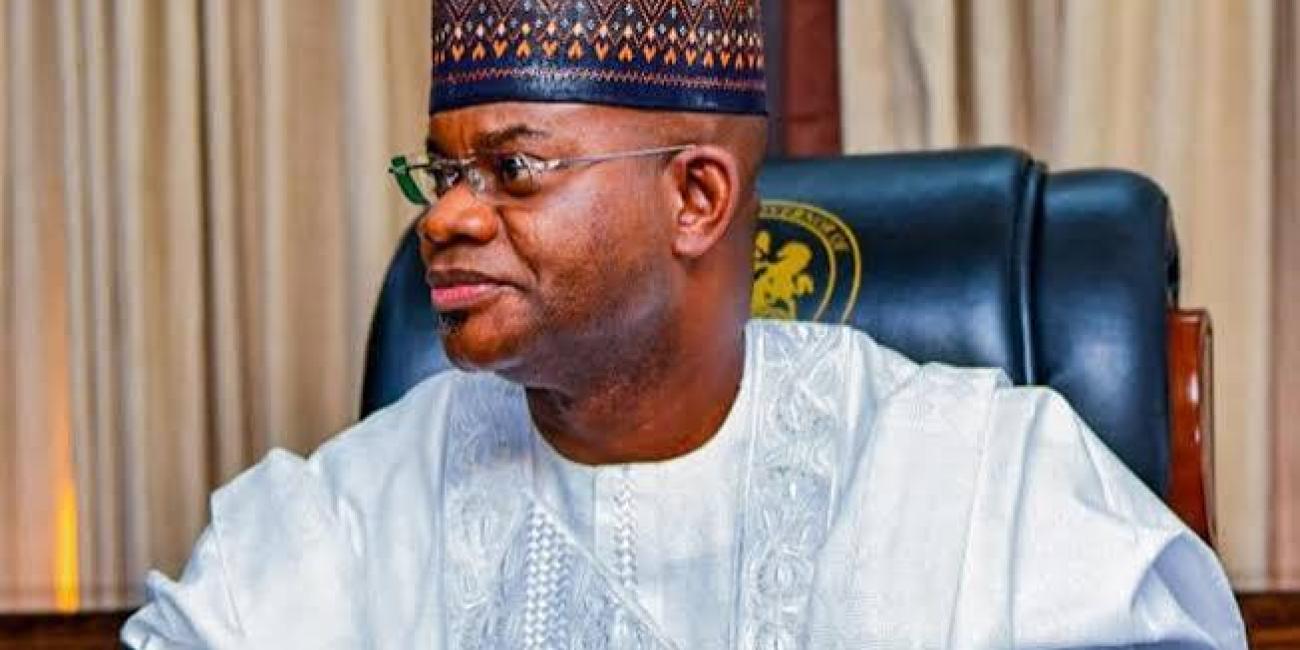
A bureeau de change operator, Jamilu Abdullahi, has told a court in Abuja that he handled foreign exchange transactions worth ₦1.425 billion on behalf of Abba Adaudu between December 2021 and February 2022.
Abdullahi, the 19th prosecution witness in the ongoing trial of former Kogi State Governor Yahaya Bello, gave the testimony on Thursday, October 15, 2026, before Justice Maryanne Anineh of the Federal Capital Territory High Court in Maitama, Abuja.
According to the witness, the transactions involved funds deposited into accounts associated with him and his company, Kunfayakun Global Limited. He told the court that the money was used to purchase foreign currencies, which he subsequently delivered to Adaudu.
The Economic and Financial Crimes Commission (EFCC) is prosecuting Bello alongside Umar Shuaibu Oricha and Abdulsalami Hudu over an alleged ₦110.4 billion fraud and money laundering scheme. The defendants are facing a 16-count charge.
Witness Explains Bank Transactions
While being led in evidence by prosecution counsel Kemi Pinheiro, SAN, Abdullahi identified several bank deposits and transfers recorded in accounts linked to him and his company.
He explained that some deposits of ₦10 million each made through a bank branch in Lokoja were connected to foreign exchange transactions arranged by Adaudu.
The witness maintained that the payments were not gifts but funds intended for purchasing United States dollars.
However, when questioned about other deposits recorded in his name, including transactions of ₦9 million and ₦8 million, Abdullahi denied making the deposits personally.
He told the court that he had never visited the Lokoja branch where some of the transactions were recorded, adding that his name could appear in transaction records as a beneficiary even when another person initiated the payment.
Abdullahi also identified several transfers involving companies he said were associated with Adaudu. He maintained that the funds were used for foreign exchange transactions and that he delivered the purchased currencies to Adaudu.
Witness Discusses School Fee Payments
The court also heard testimony concerning payments made to the American International School, Abuja.
Abdullahi said he processed school fee payments using account details and instructions provided by Adaudu. He identified Fatima Bello, Zahra Bello and Na’ima Bello as names familiar to him in connection with the transactions.
He further identified receipts presented in court as evidence of payments made to the school, explaining that he forwarded the receipts to Adaudu after completing the transactions.
During cross-examination by Abdullahi Yahaya, SAN, counsel to the first and second defendants, the witness said he had no direct dealings with any of the defendants.
When asked about the total amount he handed over to Adaudu, Abdullahi said he could not remember the exact figure because of the numerous transactions involved.
Court Adjourns Trial
Following the testimony, Justice Anineh adjourned the case until October 27 and November 24, 2026, for the continuation of proceedings.
The EFCC’s case centres on allegations that public funds belonging to Kogi State were unlawfully diverted and laundered. Bello and his co-defendants are facing prosecution over the allegations, which remain before the court.
The latest testimony forms part of the prosecution’s evidence in the ongoing trial. The allegations have yet to be determined by the court.

A Magistrate Court sitting in Bolade, Oshodi, Lagos State, has sentenced six men to two years in prison each for assaulting officials of the Lagos State Environmental Sanitation Corps, popularly known as Kick Against Indiscipline (KAI).
The conviction was announced on Thursday, October 15, 2026, by the Lagos State Commissioner for the Environment and Water Resources, Tokunbo Wahab.
According to Wahab, the six men were arrested in the Alakija area of Lagos on October 10 following an incident involving the assault of KAI officers who were carrying out their official duties.
The suspects were subsequently arraigned before the Magistrate Court in Bolade, Oshodi, where they pleaded guilty to the charges against them.
Following their guilty pleas, the court convicted each of the defendants and sentenced them to two years’ imprisonment.
The convicted men were identified as Ghadafi Ismail, Balarabe Mustapha, Usman Danladi, Abdullahi Bello, Kamala Garuba and Musa Idris.
Reacting to the development, Wahab stressed the importance of respecting public officials who carry out lawful duties on behalf of the government.
He warned that the Lagos State Government would not tolerate violence against enforcement officers, adding that offenders would face the consequences of their actions under the law.
The commissioner also urged residents to allow government officials to perform their statutory responsibilities without intimidation, obstruction or physical attacks.
The development underscores the state government’s position on protecting public officers and enforcing environmental regulations across Lagos State.
 Crime & Conflict2 days ago
El-Rufai Faces Fresh Allegations as Witness Tells Court of $600,000 EFCC Payment Plan
- Terrorism & Insurgency2 days ago
Ribadu Raises Alarm as Terrorists Turn to AI, Cryptocurrency and Drones
- Breaking Security News2 days ago
2027 Elections: Timi Frank Asks Trump to Send US Delegation to Nigeria
- Breaking Security News2 days ago
INEC Explains Why Pantami, Adebutu Were Omitted From 2027 Governorship Candidates List
- Crime & Conflict7 hours ago
₦110.4bn Fraud Trial: Witness Explains ₦1.425bn Forex Transactions Linked to Yahaya Bello Case
- Terrorism & Insurgency7 hours ago
Bandits Demand ₦500 Million Ransom for Pregnant Woman Abducted in Kaduna
- Crime & Conflict7 hours ago
Lagos Court Sentences Six Men to Two Years in Prison for Assaulting KAI Officers
- Crime & Conflict7 hours ago
Lawyers Ask EFCC to Remove Photos of Clients Facing Corruption Charges


