
Crime & Conflict
Banditry Crisis in Northern Nigeria: Ex-Kaduna Security Commissioner Calls for Cutting Criminal Funding Networks


Samuel Aruwan, former Commissioner for Internal Security and Home Affairs in Kaduna State, has warned that banditry continues to inflict severe damage on Northern Nigeria, disrupting education, healthcare delivery, food security, and rural economies. He stressed that the crisis goes beyond conventional law enforcement and military action, arguing that lasting solutions must focus on dismantling the financial and logistical systems that sustain criminal groups.
Speaking during an interview on ARISE NEWS on Wednesday, Aruwan explained that banditry thrives because of hidden support networks that provide funding, supplies, and intelligence to criminal groups. According to him, arresting bandits or launching military offensives alone will not end insecurity unless authorities also identify and block the economic and social channels that enable the crimes.
Aruwan revealed that in some affected communities, certain individuals act as intermediaries between bandits and civilians, facilitating the flow of money, fuel, food, and information. He described these individuals as critical enablers of criminal activity and called for urgent action to dismantle such networks.
“In some communities, there are people who have become middlemen for these criminals,” he said. “They tip them off, help them access funds, and support their operations. These practices must be dismantled if we are serious about ending banditry.”
He identified finances as the most critical element sustaining bandit groups, followed closely by logistics such as fuel and food supplies. According to Aruwan, bandits rely heavily on constant mobility, which requires fuel, while their survival in remote areas depends on steady access to food and other essentials.
“Bandits need fuel to move from one location to another. They need food. They need financial backing,” he explained. “The logistics companies and individuals that form part of these supply chains, alongside financial sponsors, are key factors we must address in any meaningful solution.”
Beyond economic enablers, Aruwan emphasized the need to strengthen Nigeria’s justice system and promote community-based security participation. He argued that security efforts would be more effective if local communities are actively involved in intelligence gathering and early warning mechanisms.
“We need to strengthen the justice system, and we also need to strengthen security participation,” he said. “Everyone must be integrated, especially in locations facing complex security challenges.”
Aruwan also criticized the tendency to frame banditry along ethnic or religious lines, warning that such narratives undermine effective responses and deepen social divisions. He insisted that banditry should be treated strictly as criminality and, in many cases, terrorism.
“Banditry must be separated from ethnicity and religion,” he stated. “It must be seen clearly for what it is—criminality, and in many cases, terrorism—based on the scale of violence and destruction we have witnessed.”
He highlighted the far-reaching consequences of banditry across the North West and North Central regions, particularly its impact on education. According to him, insecurity has worsened school enrolment challenges, disrupted learning, and weakened academic outcomes in public schools.
“This region is already battling enrolment issues,” Aruwan said. “Banditry has made it worse. It has affected food security, healthcare service delivery, rural economies, and even infrastructure expansion.”
He added that in many states affected by banditry, public schools struggle to produce science students who can pass core subjects such as English, Mathematics, Physics, Chemistry, and Biology. He attributed this decline partly to prolonged insecurity and instability in rural communities.
Aruwan further urged the media to focus on the actions of criminals rather than their identities, cautioning that negative profiling complicates security management and fuels mistrust.
“When you focus on identity instead of criminal actions, it becomes very difficult to manage the situation,” he said. “The emphasis should always be on what these individuals are doing, not who they are.”
He also noted a growing overlap between banditry and terrorism, explaining that while some groups are driven by ideology, others are motivated purely by financial gain. According to him, both forms of criminality increasingly intersect, posing a serious threat to national security.
In discussing long-term solutions, Aruwan stressed the importance of intelligence gathering and real-time operational coordination among security agencies. He maintained that Nigeria is not short of intelligence but needs stronger collaboration and decisive action.
“We have actionable, real-time intelligence,” he said. “What is required is clearer collaboration and operational commitment among security forces and intelligence agencies.”
Aruwan concluded by warning that failure to remove identity politics from security discussions could have devastating consequences for national stability, urging stakeholders to adopt a unified, crime-focused approach to tackling insecurity in Northern Nigeria.

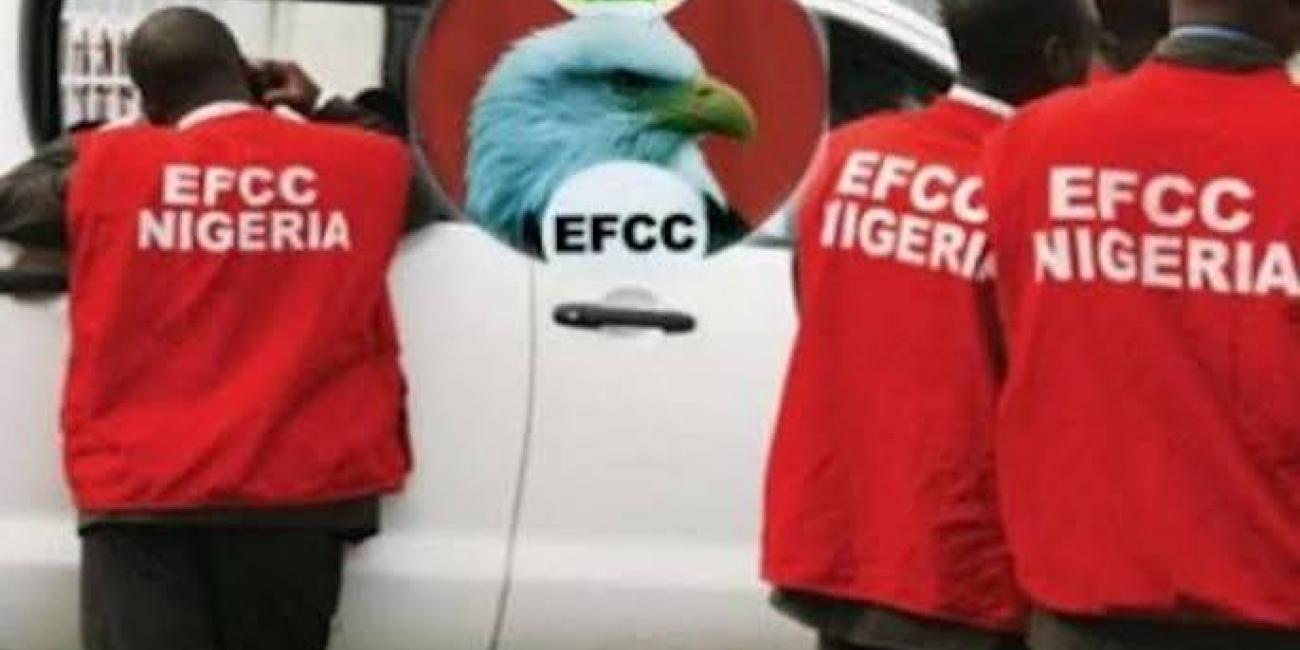
Lawyers Ask EFCC to Remove Photos of Clients Facing Corruption Charges
Lawyers representing two defendants facing corruption-related charges have asked the Economic and Financial Crimes Commission (EFCC) to remove their clients’ names and photographs from media publications linked to their ongoing criminal trial.
The lawyers argued that publishing the identities of the defendants in connection with the allegations could damage their reputations and create the impression that they had already been found guilty before the court reached a verdict.
The petition was submitted by J Aboje & Co., also known as Compass Chambers, on behalf of Folashade Oketope, a former chairwoman of the committee responsible for the sale of Federal Government houses in Abuja, and Mohammed Kabir Usman, a staff member of the Federal Capital Territory Administration (FCTA).
In a letter dated October 13, 2026, and addressed to the EFCC chairman, the law firm described the publications as an infringement on its clients’ constitutional rights, particularly the presumption of innocence and the right to dignity.
Lawyers Cite Presumption of Innocence
According to the petition, the letter followed an earlier correspondence dated July 28, 2026, concerning the publication of the defendants’ arraignment.
Oketope and Usman were arraigned before the Federal Capital Territory High Court in Jabi, Abuja, on July 13, 2026, on a three-count charge involving alleged conspiracy, breach of trust, corruption and the unlawful sale of government properties.
The allegations relate to the sale of four properties identified as Houses 3, 4, 7 and 8 at Plot 756, Abubakar Usman Crescent, Jabi, Abuja.
Oketope previously chaired the committee responsible for the sale of Federal Government houses in Abuja, while Usman was an FCTA employee seconded to the committee.
Their lawyers maintain that the defendants have not been convicted and should not be publicly portrayed as criminals while the case remains before the court.
The legal team also questioned whether the EFCC obtained permission from the court before publishing their clients’ names and photographs.
In the petition, the lawyers challenged the commission to explain whether it would apologise and withdraw the publications if the defendants were eventually acquitted.
Dispute Over Government Properties
The lawyers also referred to a separate case, identified as FCT/HC/CV/4094/2025, which they said was pending when the criminal proceedings began.
According to the petition, the separate suit concerns whether the properties in question belonged to the Federal Government and whether the committee could lawfully dispose of them.
The lawyers argued that the unresolved issues surrounding the ownership and sale of the properties should be considered alongside the criminal proceedings.
They urged the EFCC chairman to direct the removal of the disputed publications from all platforms where they appeared.
The legal team maintained that the defendants should be allowed to defend themselves in court without being subjected to what they described as prejudicial public exposure.
EFCC Reviewing Petition
The EFCC had not publicly responded to the specific allegations in the petition as of the time of the report.
However, a senior commission official, who spoke anonymously because they were not authorised to comment publicly, confirmed that the agency had received the petition.
The official reportedly said the commission’s legal team was reviewing the matter.
The dispute highlights the debate over how anti-corruption agencies communicate information about ongoing prosecutions while respecting the rights of defendants who have not been convicted.
For now, the request to remove the photographs remains a demand by the defendants’ lawyers, and the outcome of the ongoing court proceedings will determine the criminal allegations against their clients.
Crime & Conflict
₦110.4bn Fraud Trial: Witness Explains ₦1.425bn Forex Transactions Linked to Yahaya Bello Case
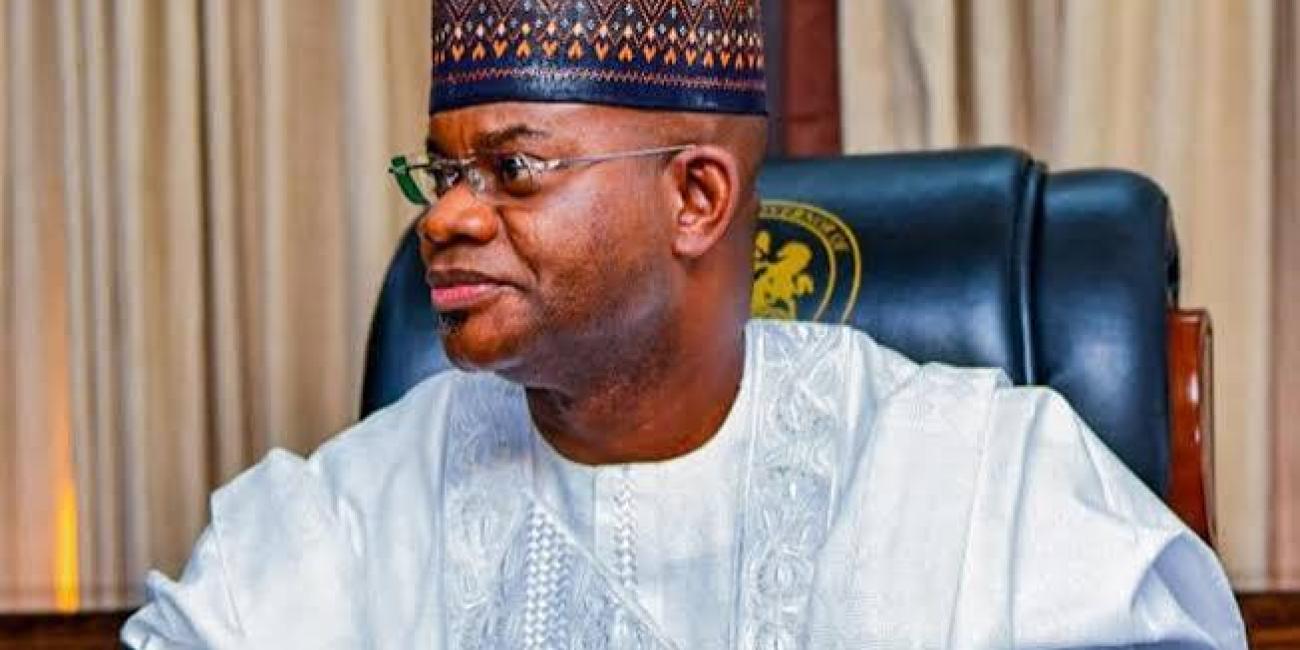
A bureeau de change operator, Jamilu Abdullahi, has told a court in Abuja that he handled foreign exchange transactions worth ₦1.425 billion on behalf of Abba Adaudu between December 2021 and February 2022.
Abdullahi, the 19th prosecution witness in the ongoing trial of former Kogi State Governor Yahaya Bello, gave the testimony on Thursday, October 15, 2026, before Justice Maryanne Anineh of the Federal Capital Territory High Court in Maitama, Abuja.
According to the witness, the transactions involved funds deposited into accounts associated with him and his company, Kunfayakun Global Limited. He told the court that the money was used to purchase foreign currencies, which he subsequently delivered to Adaudu.
The Economic and Financial Crimes Commission (EFCC) is prosecuting Bello alongside Umar Shuaibu Oricha and Abdulsalami Hudu over an alleged ₦110.4 billion fraud and money laundering scheme. The defendants are facing a 16-count charge.
Witness Explains Bank Transactions
While being led in evidence by prosecution counsel Kemi Pinheiro, SAN, Abdullahi identified several bank deposits and transfers recorded in accounts linked to him and his company.
He explained that some deposits of ₦10 million each made through a bank branch in Lokoja were connected to foreign exchange transactions arranged by Adaudu.
The witness maintained that the payments were not gifts but funds intended for purchasing United States dollars.
However, when questioned about other deposits recorded in his name, including transactions of ₦9 million and ₦8 million, Abdullahi denied making the deposits personally.
He told the court that he had never visited the Lokoja branch where some of the transactions were recorded, adding that his name could appear in transaction records as a beneficiary even when another person initiated the payment.
Abdullahi also identified several transfers involving companies he said were associated with Adaudu. He maintained that the funds were used for foreign exchange transactions and that he delivered the purchased currencies to Adaudu.
Witness Discusses School Fee Payments
The court also heard testimony concerning payments made to the American International School, Abuja.
Abdullahi said he processed school fee payments using account details and instructions provided by Adaudu. He identified Fatima Bello, Zahra Bello and Na’ima Bello as names familiar to him in connection with the transactions.
He further identified receipts presented in court as evidence of payments made to the school, explaining that he forwarded the receipts to Adaudu after completing the transactions.
During cross-examination by Abdullahi Yahaya, SAN, counsel to the first and second defendants, the witness said he had no direct dealings with any of the defendants.
When asked about the total amount he handed over to Adaudu, Abdullahi said he could not remember the exact figure because of the numerous transactions involved.
Court Adjourns Trial
Following the testimony, Justice Anineh adjourned the case until October 27 and November 24, 2026, for the continuation of proceedings.
The EFCC’s case centres on allegations that public funds belonging to Kogi State were unlawfully diverted and laundered. Bello and his co-defendants are facing prosecution over the allegations, which remain before the court.
The latest testimony forms part of the prosecution’s evidence in the ongoing trial. The allegations have yet to be determined by the court.

A Magistrate Court sitting in Bolade, Oshodi, Lagos State, has sentenced six men to two years in prison each for assaulting officials of the Lagos State Environmental Sanitation Corps, popularly known as Kick Against Indiscipline (KAI).
The conviction was announced on Thursday, October 15, 2026, by the Lagos State Commissioner for the Environment and Water Resources, Tokunbo Wahab.
According to Wahab, the six men were arrested in the Alakija area of Lagos on October 10 following an incident involving the assault of KAI officers who were carrying out their official duties.
The suspects were subsequently arraigned before the Magistrate Court in Bolade, Oshodi, where they pleaded guilty to the charges against them.
Following their guilty pleas, the court convicted each of the defendants and sentenced them to two years’ imprisonment.
The convicted men were identified as Ghadafi Ismail, Balarabe Mustapha, Usman Danladi, Abdullahi Bello, Kamala Garuba and Musa Idris.
Reacting to the development, Wahab stressed the importance of respecting public officials who carry out lawful duties on behalf of the government.
He warned that the Lagos State Government would not tolerate violence against enforcement officers, adding that offenders would face the consequences of their actions under the law.
The commissioner also urged residents to allow government officials to perform their statutory responsibilities without intimidation, obstruction or physical attacks.
The development underscores the state government’s position on protecting public officers and enforcing environmental regulations across Lagos State.
 Crime & Conflict2 days ago
El-Rufai Faces Fresh Allegations as Witness Tells Court of $600,000 EFCC Payment Plan
- Breaking Security News2 days ago
INEC Explains Why Pantami, Adebutu Were Omitted From 2027 Governorship Candidates List
- Terrorism & Insurgency2 days ago
Ribadu Raises Alarm as Terrorists Turn to AI, Cryptocurrency and Drones
- Breaking Security News2 days ago
2027 Elections: Timi Frank Asks Trump to Send US Delegation to Nigeria
- Crime & Conflict6 hours ago
₦110.4bn Fraud Trial: Witness Explains ₦1.425bn Forex Transactions Linked to Yahaya Bello Case
- Terrorism & Insurgency6 hours ago
Bandits Demand ₦500 Million Ransom for Pregnant Woman Abducted in Kaduna
- Crime & Conflict6 hours ago
Lawyers Ask EFCC to Remove Photos of Clients Facing Corruption Charges
- Breaking Security News6 hours ago
Senate Orders Probe Into NYSC Member’s Death at Enugu Camp, Healthcare Nationwide


