Breaking Security News
Bola Tinubu Removes Scandal-Hit Police Chief Kayode Egbetokun; Tunji Disu Set to Take Over Amid Internal Jubilation

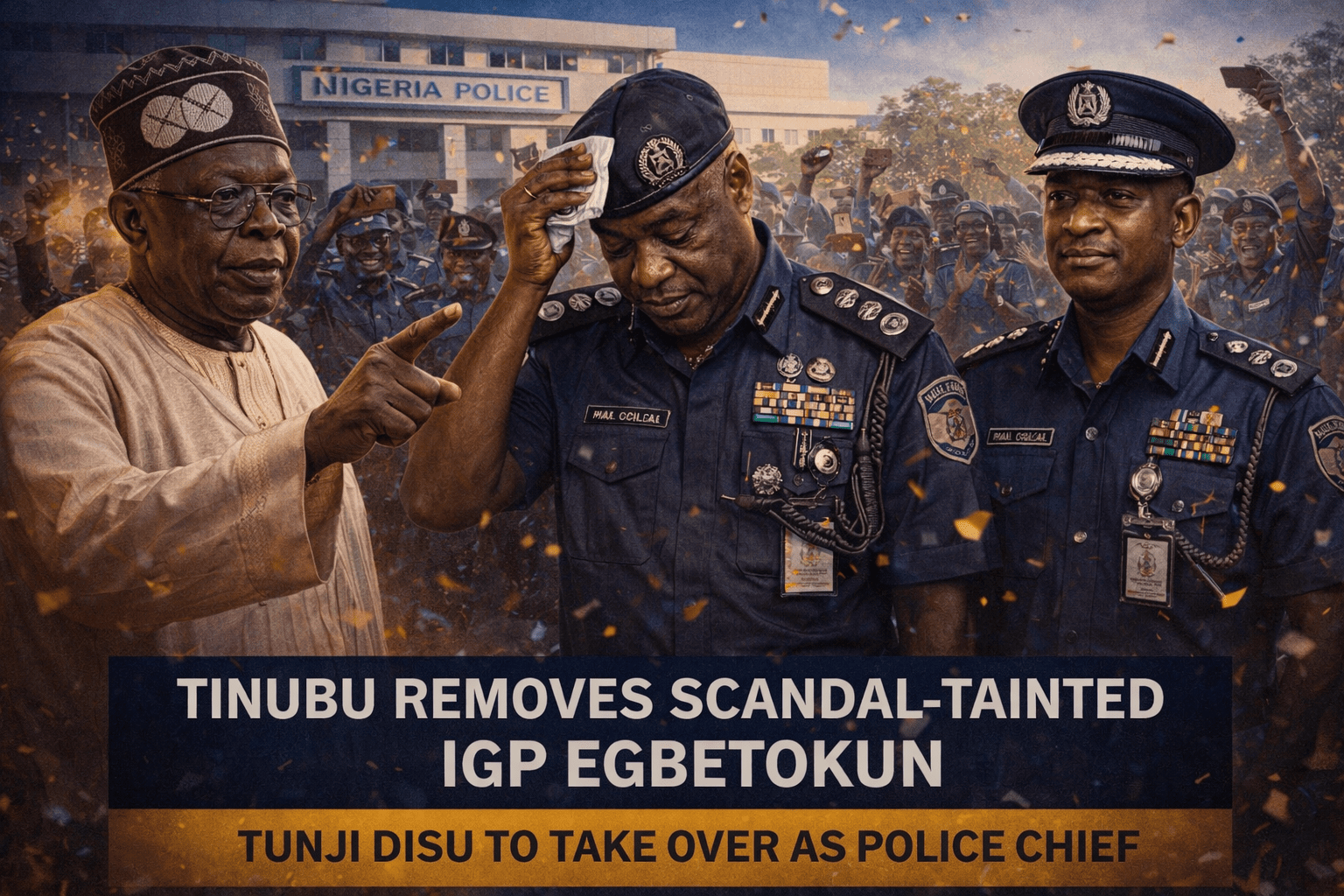
Nigeria’s security architecture witnessed a dramatic shakeup as President Bola Tinubu ordered the removal of Inspector General of Police, Kayode Egbetokun, following months of controversy, internal discontent, and allegations that placed the nation’s top police officer under intense scrutiny.
Multiple senior security sources confirmed that the President directed him to prepare handover notes, clearing the way for Assistant Inspector General Tunji Disu to assume leadership of the Nigeria Police Force.
His removal reportedly triggered massive jubilation at the Force Headquarters in Abuja, underscoring deep institutional dissatisfaction that had accumulated throughout his tenure.
WHY THE PRESIDENT ACTED — KEY REPORTED FACTORS
Sources cited by SaharaReporters outlined several reasons for the President’s decision, including:
1. Mounting Scandals
His tenure was heavily marked by controversies, many of which dominated public discussions on police credibility. These included:
- Questions over extended tenure beyond retirement age
- Allegations of preferential treatment involving his Principal Staff Officer
- Financial controversies relating to funds linked to his son
- Aggressive legal actions against media organisations and activists
The Presidency reportedly concluded that the controversies had undermined public trust in the Nigeria Police Force, making his continued stay untenable.
2. Internal Discontent Within the Nigeria Police
Police sources claimed that officers had grown frustrated, describing his leadership style as rigid and “overcentralized,” creating operational constraints and morale issues.
According to insiders, the announcement of his removal was met with:
- Spontaneous applause
- Celebratory gatherings
- Visible relief among senior and mid-level officers
Such reactions signaled that confidence in the former IGP had drastically eroded.
3. Alleged Health Concerns
Reports also suggested that the President advised him to step aside to focus on treatment for kidney-related medical issues, which might have affected his capacity to discharge duties effectively.
These health concerns, although personal, reportedly became part of the overall justification for his removal.
THE SCANDALS THAT SHAPED HIS FALL: FULL BREAKDOWN
A. Tenure Extension Controversy
Nigeria’s police regulations specify clear retirement rules:
- 60 years of age, or
- 35 years in service, whichever comes first.
Critics argued that permitting a prolonged stay created a dangerous precedent, weakening institutional discipline and raising allegations of preferential protection by political actors.
B. Promotion Controversy Involving Bukola Yemisi Kuti
One of the most widely discussed allegations involved Bukola Yemisi Kuti, a Principal Staff Officer to the IGP.
Reports alleged:
- Rapid promotions within an unusually short period
- Possible personal closeness to the IGP, fueling accusations of favoritism
- Administrative irregularities in her career progression
These allegations worsened public perception and caused resentment within the Force.
C. ₦100 Million Traced to Son’s Account — A Political Firestorm
SaharaReporters earlier reported that ₦100 million belonging to Anambra State’s security vote was allegedly traced to the bank account of his son, Victor Egbetokun.
Although the IGP denied wrongdoing and pursued legal action, the lack of a transparent independent investigation contributed to rising suspicion.
Observers argued that:
- The oversight mechanisms failed
- The allegations required open audit
- Legal pressure on journalists deepened concerns about accountability
D. Legal Battles Against Critics: The Sowore–SaharaReporters Episode
During his tenure, the IGP initiated multiple lawsuits against activists and media outlets — actions critics said were aimed at suppressing press freedom.
Activist Omoyele Sowore publicly referred to him as an “illegal IGP,” leading to court actions and injunctions.
Analysts argued that:
- These reactions distracted the police from core security responsibilities
- They worsened public perception
- They raised questions about tolerance for criticism
The legal battles became a symbol of a security institution increasingly perceived as intolerant of scrutiny.
THE ROLE OF THE FIRST LADY — REPORTED TENSIONS
Multiple sources told reporters that First Lady Remi Tinubu supported retaining the outgoing IGP.
However:
- The President reportedly held a firm position
- He insisted on leadership stability and institutional integrity
- This resulted in a quiet but decisive override of internal lobbying
This underscores growing emphasis by the Presidency on security professionalism over political convenience.
WHO IS TUNJI DISU? (Successor Overview)
AIG Tunji Disu is widely regarded as one of the most disciplined and operationally experienced officers in the Force.
Key Highlights:
- Former head of the Lagos State Rapid Response Squad (RRS)
- Known for community-friendly policing
- Highly trained in counter-terrorism and intelligence
- Strong reputation for discipline and operational efficiency
His appointment is already drawing praise from officers and civil society groups who describe him as a “professional’s professional.”
IMPLICATIONS FOR NIGERIA’S SECURITY ARCHITECTURE
1. Institutional Reset
The change at the helm signals a push toward:
- Transparency
- Restoring discipline
- Rebuilding public confidence in the Force
2. Strengthening Rule of Law
The removal addresses criticism about:
- Violations of retirement rules
- Alleged favouritism
- Perceived ethical lapses
This may help reinforce the importance of institutional integrity.
3. Improved Police–Media Relations
A successor perceived as more open to criticism may encourage:
- Reduced legal intimidation
- Improved press freedom
- Better public accountability
4. Possible Restructuring of Key Police Units
AIG Disu is expected to:
- Re-evaluate top postings
- Review controversial promotion pathways
- Strengthen internal anti-corruption controls
CONCLUSION
President Bola Tinubu’s removal of Kayode Egbetokun marks one of the most consequential policing shake-ups in recent years.
With AIG Tunji Disu stepping in, expectations are high for:
- A more transparent, professional police leadership
- Restoration of morale within the ranks
- Greater public trust in Nigeria’s policing institutions
The transition represents an opportunity for a strategic reboot at a time when Nigeria urgently needs a credible and effective police force.
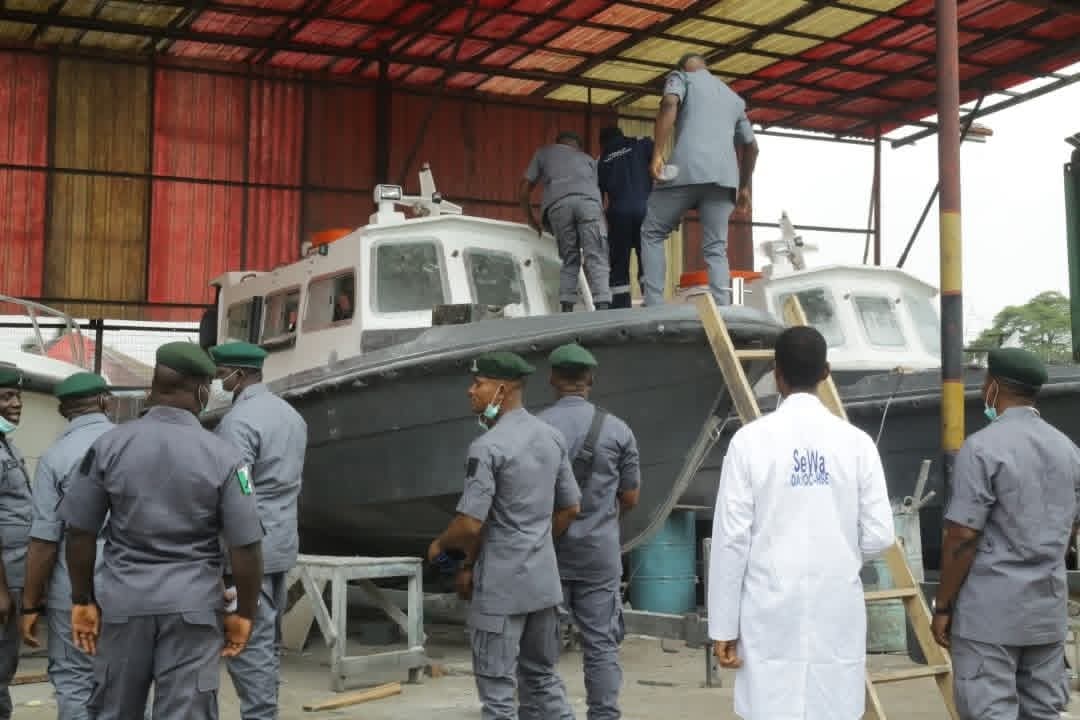
In a strategic move aimed at enhancing maritime security, the Nigeria Customs Service recently concluded a three-day specialised training program for officers of its Eastern Marine Command. Held from 18–20 February 2026 at SeWa West Africa Ltd, Port Harcourt, the program focused on the operation and maintenance of newly acquired patrol boats, representing a major step forward in the modernization of Nigeria’s maritime enforcement capabilities.
This initiative not only strengthens the operational capacity of the Eastern Marine Command but also underscores a broader vision: transforming Customs into a technology-driven, intelligence-led, and enforcement-strong organization capable of securing Nigeria’s territorial waters, combating smuggling, and safeguarding economic and national security.
1. Context: The Need for Enhanced Maritime Security
Nigeria’s maritime domain spans thousands of kilometers along the Atlantic coast and numerous inland waterways. These areas are critical for:
- Trade and commerce: Ports such as Port Harcourt, Onne, and Calabar handle billions in imports and exports annually.
- Energy distribution: Petroleum products are frequently transported via inland and coastal waterways.
- National security: Smuggling, piracy, illegal bunkering, and transnational crimes threaten economic stability and regional safety.
Historically, inadequate equipment, limited technical know-how, and fragmented enforcement coordination have hindered maritime security. The acquisition of modern patrol boats represents a significant upgrade in asset-based operational capacity, but effectiveness depends on well-trained personnel.
2. Objectives of the Training Program
The three-day training focused on several key areas:
- Technical Competence:
Officers received in-depth instruction on patrol boat operation, navigation, engine systems, and onboard technology. - Maintenance and Asset Management:
Emphasis was placed on preventive servicing, routine inspections, proper documentation, and safety compliance to sustain operational readiness. - Practical Field Exercises:
Participants conducted simulated patrols and boarding operations to reinforce skills learned in classroom sessions. - Institutional Alignment:
The program instilled discipline and adherence to operational guidelines, ensuring personnel can maximize the strategic value of new assets.
By integrating theory with hands-on practice, the NCS ensures that patrol boats are not merely assets but force multipliers in Nigeria’s maritime security strategy.
3. Leadership Perspective: Strategic Importance of the Initiative
Comptroller Anderson Jaja, head of the Eastern Marine Command, described the training as a “major milestone in the Service’s modernisation drive.” He emphasized that operational effectiveness depends on the synergy between technology and human capacity, noting that even the most advanced patrol boats require skilled personnel to achieve their intended impact.
Jaja also highlighted alignment with the Comptroller-General of Customs, Adewale Adeniyi’s strategic vision, which prioritizes:
- Intelligence-driven enforcement
- Technologically advanced operations
- Enhanced capacity to combat smuggling, economic sabotage, and transnational maritime crimes
This signals a shift toward a professional, accountable, and responsive maritime Customs service that can project authority across Nigeria’s waterways.
4. Enhancing Operational Readiness Through Technical Competence
Effective maritime security requires more than equipment; it demands technically competent personnel capable of:
- Performing high-speed interceptions
- Navigating complex waterways
- Responding to emergencies
- Conducting boarding and inspection operations
- Maintaining vessel performance under harsh conditions
The training emphasized preventive maintenance and operational discipline. By instilling a culture of routine inspections and adherence to safety protocols, the Service minimizes equipment downtime and maximizes mission readiness.
5. Practical Benefits: Combating Smuggling and Economic Sabotage
The acquisition and deployment of patrol boats, combined with trained personnel, directly impact Nigeria’s economic security:
- Deterrence of smuggling: Rapid response patrols prevent illicit movement of petroleum products and other contraband.
- Protection of legitimate trade: Law-abiding shipping operators benefit from secure waterways and reduced interference.
- Revenue protection: Ensures that duties and taxes are collected on legally transported goods.
- Inter-agency support: Provides the Navy, Port Authorities, and security agencies with an effective partner for coordinated enforcement.
Operation-ready patrol boats create a visible and credible presence in maritime corridors, dissuading potential smugglers and pirates.
6. Strategic Implications for National Security
The Eastern Marine Command covers high-risk coastal and riverine zones, including parts of the Niger Delta and southeastern waterways. With enhanced technical capacity, the Command can:
- Monitor illegal bunkering and pipeline tapping
- Intercept unauthorized vessels
- Support anti-piracy operations in collaboration with the Nigerian Navy
- Conduct rapid-response rescues and environmental protection operations
This proactive stance strengthens national sovereignty, mitigates threats to energy infrastructure, and reinforces Nigeria’s position as a secure maritime nation in West Africa.
7. The Role of Continuous Training and Institutional Strength
Comptroller Jaja highlighted that continuous capacity-building is central to institutional resilience. Regular training ensures:
- Personnel remain updated on emerging threats and technology
- Operational protocols are reinforced and standardized
- Knowledge transfer from technical experts to junior officers occurs effectively
- High standards of discipline and operational readiness are maintained
By investing in human capital, the NCS ensures that modernization is not limited to equipment but also encompasses skills, professionalism, and institutional knowledge.
8. Collaboration With Technical Experts
The training program leveraged expertise from SeWa West Africa Ltd, combining industry knowledge with operational realities. This partnership:
- Ensures proper technical handling and maintenance of patrol boats
- Provides advanced operational techniques
- Reduces human error and equipment misuse
- Enhances long-term asset sustainability
Such collaborations demonstrate the importance of public-private partnerships in modernizing security institutions.
9. Broader Impact on Maritime Enforcement in Nigeria
Beyond the Eastern Marine Command, this initiative:
- Serves as a model for other regional Commands, encouraging adoption of similar capacity-building measures.
- Contributes to Nigeria’s comprehensive maritime security framework, integrating Customs with Navy, Police, and other agencies.
- Strengthens regional deterrence, sending a message that smuggling and illegal maritime activities will be met with advanced, capable enforcement.
Enhanced capability also fosters economic confidence, reassuring investors and businesses that waterways are secure.
10. Policy Implications and Recommendations
To sustain momentum and maximize operational impact:
- Expand Training Across Commands:
Ensure all regional Marine Commands receive similar specialized training. - Implement Advanced Maintenance Programs:
Routine checks, preventive servicing, and technical audits to maintain vessel efficiency. - Strengthen Intelligence Integration:
Equip patrol units with actionable intelligence for targeted interdiction operations. - Foster Inter-Agency Collaboration:
Establish joint patrols with the Navy and other enforcement agencies. - Leverage Technology:
Equip vessels with GPS tracking, real-time communication, and surveillance tools to improve operational outcomes. - Institutionalize Knowledge Transfer:
Senior officers and technical experts must mentor junior personnel for sustainable capability.
11. Conclusion
The recent Eastern Marine Command training program reflects the Nigeria Customs Service’s commitment to modernisation, technical excellence, and operational effectiveness. By pairing state-of-the-art patrol boats with highly trained personnel, the Service strengthens Nigeria’s maritime enforcement, safeguards legitimate trade, protects national revenue, and reinforces regional security.
Maritime security is a complex challenge, encompassing smuggling, piracy, and economic sabotage. But as demonstrated by this initiative, investing in people, technology, and procedural discipline transforms the Customs Service into a credible, responsive, and deterrent force.
In essence, Nigeria’s maritime corridors are now better protected, professionally managed, and strategically monitored, providing a model for law enforcement and institutional excellence across the nation.
Breaking Security News
Intelligence-Led Customs Operation Foils 154,000-Litre Fuel Diversion Across Badagry Corridor

In a decisive move reinforcing Nigeria’s economic and energy security, the Nigeria Customs Service recently intercepted three fuel-laden tankers carrying a total of 154,000 litres of Premium Motor Spirit (PMS) along the Badagry corridor. The operation, led by Operation Whirlwind, showcases the critical role of intelligence-led enforcement in curbing smuggling and protecting the nation’s energy supply.
This report examines the incident in depth, analyzes the operational strategies deployed, highlights the broader implications for economic security, and offers a comprehensive overview of how Nigerian authorities are leveraging intelligence, technology, and inter-agency collaboration to combat petroleum product diversion.
1. Overview of the Interception
Deputy Comptroller Abubakar Aliyu, National Coordinator of Operation Whirlwind, revealed that the seizure occurred after sustained surveillance along the Owode Apa, Seme, and Badagry axes. The tankers contained 60,000 litres, 49,000 litres, and 45,000 litres of PMS, respectively — a total of 154,000 litres — all in violation of regulatory procedures governing the transportation of petroleum products.
This interception was not coincidental. Aliyu emphasized that it was the product of meticulous intelligence gathering, strategic monitoring, and field vigilance, reflecting the Service’s zero-tolerance approach to economic sabotage.
2. Intelligence-Led Enforcement in Action
The Badagry corridor has historically been a hub for illicit cross-border petroleum movements due to its proximity to major trade routes with Benin and other West African states. Operation Whirlwind’s success highlights several key intelligence strategies:
- Surveillance Networks: Officers conducted targeted observation along key checkpoints and border communities, monitoring fuel convoys for irregular movements.
- Human Intelligence (HUMINT): Informants within transport networks provided actionable tips that guided interception points.
- Pattern Analysis: Historical smuggling patterns and logistical footprints were used to predict potential illegal operations.
- Risk Profiling: Tankers and drivers exhibiting unusual behaviors were prioritized for inspection.
The combination of these intelligence methodologies enabled the precise and timely interception of contraband fuel before it reached the black market.
3. Economic Implications of Fuel Diversion
The diversion of PMS has far-reaching consequences for Nigeria’s economy:
- Revenue Loss: Smuggled fuel bypasses taxation and duty, depriving the federal government of significant revenue.
- Price Distortion: Illegal distribution artificially inflates or deflates domestic fuel prices, affecting consumers and businesses.
- Energy Insecurity: When PMS intended for domestic use is exported illicitly, critical sectors such as transportation, power generation, and manufacturing face shortages.
- Encouragement of Organized Crime: Successful smuggling incentivizes criminal networks to expand operations, undermining law enforcement efforts.
By intercepting 154,000 litres, Operation Whirlwind directly curtailed revenue leakage and protected supply chains, ensuring that domestic demand for fuel remains stable.
4. Operational Scale: Beyond Tankers
The recent operation is part of a broader, multi-faceted enforcement effort:
- Within nine weeks, operatives seized 1,630 jerry-cans of PMS, totaling 40,750 litres, with a Duty Paid Value (DPV) of ₦40.75 million.
- These seizures were conducted across critical border points, reflecting a sustained and systematic approach rather than sporadic enforcement.
- The coordinated use of inspection teams, checkpoints, and mobile patrol units ensures continuous coverage of vulnerable economic arteries.
This scale demonstrates that the NCS is capable of executing intelligence-led operations efficiently, repeatedly, and transparently.
5. Regulatory Compliance and Standard Operating Procedures
Petroleum product transportation in Nigeria is tightly regulated:
- Tankers must possess official permits and documentation.
- Loads must match declared quantities.
- Routes must comply with approved corridors.
- All movements are subject to periodic inspection and audit.
The intercepted tankers violated these procedures, highlighting the risk posed by non-compliance and criminal exploitation of regulatory gaps. By enforcing SOPs, the NCS upholds both legality and national interest.
6. Inter-Agency Collaboration
Effective enforcement requires coordination beyond the Customs Service:
- The seized tankers were handed over to the Nigerian Midstream and Downstream Petroleum Regulatory Authority, which ensured proper regulatory action.
- Representatives praised the synergy, emphasizing the importance of multi-agency cooperation in maintaining domestic fuel supply integrity.
- Inter-agency collaboration strengthens intelligence sharing, rapid response, and legal enforcement capacity, creating a robust deterrent against smuggling networks.
7. Transparency and Public Accountability
Operation Whirlwind has prioritized transparency:
- Seized fuel in jerry-cans was auctioned publicly in accordance with regulations.
- This approach prevents diversion from within enforcement ranks.
- Public auctions reinforce confidence in government institutions and demonstrate accountable asset management.
Transparency not only strengthens public trust but also acts as a psychological deterrent to would-be smugglers aware that seized assets cannot be secretly diverted.
8. The Strategic Significance of the Badagry Corridor
Badagry is one of Nigeria’s most sensitive border points:
- Proximity to international markets makes it a hub for both legal and illicit trade.
- Historical exploitation of the corridor by smuggling syndicates underscores its vulnerability.
- Continuous intelligence-led operations ensure that the corridor remains a secure artery for lawful commerce.
By securing Badagry, the NCS safeguards not only economic interests but also regional stability, as fuel smuggling often finances organized criminal and insurgent activities.
9. Lessons for Enforcement and Policy
- Intelligence-Led Operations Are Key: Proactive surveillance and HUMINT yield far better results than reactive enforcement.
- Inter-Agency Cooperation Works: Combined efforts of Customs, Petroleum Authorities, and local enforcement amplify effectiveness.
- Transparency Builds Confidence: Public auctions and accountable seizure processes deter internal corruption.
- Regulatory Compliance Must Be Enforced: Strict adherence to SOPs prevents diversion and establishes predictability in fuel supply.
- Community and Private Sector Engagement: Local transport operators, fuel depots, and community leaders can provide real-time intelligence.
10. Broader Implications for Nigeria’s Energy Security
Smuggling operations undermine domestic fuel supply, threaten industrial production, and can destabilize local markets. By foiling large-scale diversion:
- Domestic PMS availability is stabilized.
- Fuel prices remain less volatile.
- Organized smuggling networks face financial setbacks.
- Security forces reinforce public confidence in governance.
Sustained intelligence-led enforcement is therefore not just a tactical success but a strategic imperative for Nigeria’s national security.
11. Conclusion
The interception of 154,000 litres of PMS along the Badagry corridor illustrates the effectiveness of intelligence-led operations, inter-agency collaboration, and adherence to regulatory standards. Operation Whirlwind demonstrates that proactive, coordinated enforcement can significantly reduce smuggling and protect Nigeria’s economic and energy interests.
The success reinforces a broader principle: in the fight against economic sabotage, intelligence, vigilance, and transparency are as vital as boots on the ground. As Nigeria continues to strengthen border security and regulatory oversight, similar operations are expected to sustain domestic fuel availability and deter future smuggling attempts.
Breaking Security News
Atiku Abubakar Says Peace Deals With Bandits Favor Criminals Over Victims, Calls for Stronger Actions to End Insecurity

Former Vice-President Atiku Abubakar has sharply criticised government negotiations with bandit gangs, warning that current peace deals too often benefit the criminals and fail to protect ordinary Nigerians. His remarks, delivered on Wednesday in Abuja through a statement by his media aide, reflect growing national frustration with the rising toll of insecurity and abductions in parts of the country.
Atiku, a senior leader of the African Democratic Congress (ADC) and a former presidential candidate, acknowledged that negotiations can play a role in ending violence but insisted that the state must not allow armed groups to dictate terms of peace agreements. He argued that bandits frequently renege on commitments made during such talks, leaving communities vulnerable and unprotected.
“Those peace deals always favour the bandits more than their victims, and they have always fooled the government’s negotiators,” Atiku said, stressing that the trend undermines deterrence and emboldens criminal networks.
Why Atiku Says Peace Deals Are Failing
Atiku’s critique focuses on what he sees as structural weaknesses in the negotiation approach adopted by some state governments and the federal authorities. In recent years, several states, particularly in north-western Nigeria, have pursued community-driven peace agreements with bandit groups in hopes of reducing violence and kidnappings. In some cases, these deals have involved releasing detained suspects and offering inducements in exchange for temporary calm.
However, Atiku warns that such agreements can backfire when they:
- Reward criminals for violent behaviour, giving them leverage rather than insisting on disarmament;
- Fail to secure lasting commitments, as bandits often breach terms once they regroup;
- Create public perception of weakness, signalling that force or threats of force are less effective than extraction of concessions;
- Undermine justice for victims, especially families who have lost loved ones or suffered trauma from attacks.
He said it was especially troubling that negotiations sometimes occur when governors are, in his words, “on their knees begging bandits in the name of peace deals.” Atiku insisted that such approaches erode the authority of the state and fail to deter further attacks.
Rising Attacks Despite Peace Talks
Atiku’s comments were delivered in the context of renewed insecurity, including a spate of attacks and abductions in Kaduna State’s Kurmin Wali community, where gunmen reportedly abducted more than 100 worshippers during church services earlier this month.
Reacting to that incident, he described it as “colossally embarrassing” that “non-state actors” continue to operate with impunity, holding communities “hostage” while government responses lag behind.
He urged the government not to wait until attacks occur before acting, arguing that proactive security measures and credible deterrence are necessary to protect citizens.
Calls for Results Over Rhetoric
In his statement, Atiku also made a broader critique of what he sees as overreliance on strong language from government officials, saying Nigerians want results, not rhetoric. He said experience shows that condemnation without effective action has not deterred the menace of banditry and other forms of violent crime.
“Experience has shown that if rhetoric were enough to deter the bandits, the menace would have ended a long time ago,” he added, echoing concerns shared by many civil society groups and victims’ advocates.
Accountability and Government Responses
Atiku also challenged the federal government, led by President Bola Tinubu and the All Progressives Congress (APC), to be held accountable for campaign promises on security. He drew parallels with how the opposition once held previous administrations to high standards and said the current government should be measured by the same yardstick.
State governments such as Katsina have been particularly active in facilitating dialogue with bandit groups, including reportedly working toward the release of some suspected militants in custody as part of peace efforts. Supporters of these strategies argue they can reduce violence and free hostages. Critics like Atiku contend that without real enforcement and justice, such moves merely grant temporary respite while emboldening criminals.
National Reaction and Broader Security Debate
Atiku’s remarks are part of a wider national conversation on insecurity in Nigeria — a debate that spans political parties, civil society, and the public. Many Nigerians have expressed frustration over repeated attacks, kidnappings, and the slow pace of effective response, calling for a combination of strategic security operations, community protections, and socio-economic interventions.
Some analysts say the challenge is complex, with bandit and insurgent groups adapting quickly to military pressure while exploiting grievances and weak governance in some rural areas. Others call for a balanced strategy that combines clear law enforcement with community engagement and development programmes to reduce recruitment and support for violent groups.
Atiku’s statement will likely intensify scrutiny of peace-negotiation strategies and the balance between dialogue and deterrence in national security policy.
What This Means for Nigerians
For many families affected by bandit attacks, kidnappings, and displacement, the debate over peace deals is not abstract — it is about safety and survival. Critics of negotiated truces argue that short-term calm achieved by releasing suspects or making concessions does not address underlying issues of poverty, lack of governance, and radicalisation that fuel violence.
At the same time, supporters of dialogue say negotiation can prevent loss of life and create pathways for reintegration of repentant fighters. The challenge, according to experts, lies in designing agreements that:
- Protect communities
- Release hostages
- Hold criminals accountable
- Create conditions for long-term peace
without allowing armed groups undue influence over state policy or undermining the rule of law.
Peace Deals and Banditry in Nigeria
• Former Vice-President Atiku Abubakar criticised peace deals, saying they benefit bandits over their victims and allow criminals to “fool” government negotiators.
• He noted that states like Katsina have engaged in talks with bandits to reduce attacks, but called for stronger government action.
• Atiku urged the government to be proactive, noting Nigerians demand results rather than rhetorical condemnations.
• The criticism follows high-profile attacks, including the abduction of worshippers in Kajuru LGA, Kaduna State.
-
 Community Safety & Public Alerts2 weeks ago
2026 Security Outlook: Key Threat Trends Nigeria Must Prepare For
-
Community Safety & Public Alerts2 weeks ago
Inside Nigeria’s Growing Border Security Challenge: How Weak Perimeters Fuel Crime Networks
-
Community Safety & Public Alerts2 weeks ago
Rising Kidnappings Across Nigeria: Security Agencies Intensify Crackdown as Criminal Networks Expand Their Operations
-
Community Safety & Public Alerts2 weeks ago
Nigeria’s Border Security Crisis Deepens: How Porous Frontiers Fuel Arms Smuggling, Terror Mobility, and Rising Insecurity
-
Community Safety & Public Alerts2 weeks ago
How Bandit Command Structures Operate Across Zamfara & Katsina: Inside the Criminal Networks
-
Community Safety & Public Alerts2 weeks ago
Rising Community Vigilance as Security Pressures Intensify Across Nigeria
-
Community Safety & Public Alerts2 weeks ago
How Technology Is quietly reshaping Rural Security Response in Nigeria
-
Terrorism & Insurgency1 week ago
Why Troops Struggle in the Forest Belts of Niger State, Kaduna State and Katsina State