
Crime & Conflict
Oyo Police Inspector Killed in Bandit Ambush at Budo Masalasi Border Post: Inside the Attack, the Investigations, and Rising Security Tensions

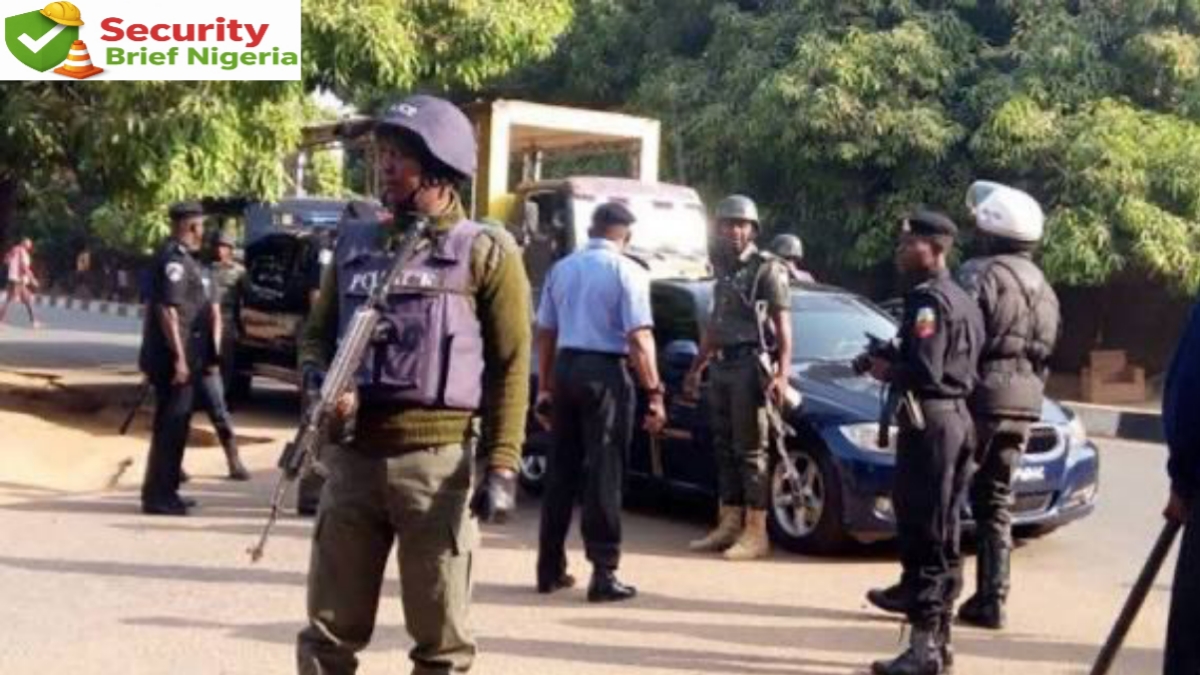
The security atmosphere in Oyo State has once again been shaken following the killing of a police inspector during a violent ambush by suspected armed bandits operating around the Budo Masalasi Border Post—an area already known for high-risk criminal activities and frequent cross-border movement. The attack, which occurred on January 24, has raised fresh concerns about bandit infiltration into border communities in the Oke-Ogun region and the increasing dangers faced by law enforcement officers stationed in rural security outposts.
According to confirmed reports, a patrol team led by ASP Entonu Shaibu was on routine border surveillance when they encountered a heavily armed group of 10 to 15 suspected bandits. What followed was a fierce gun battle that left Inspector Aliu Oluwole dead and resulted in the loss of his service rifle—an AK-47 with 30 rounds of ammunition, identified by breach number 4516.
As police tactical teams intensify efforts to track down the assailants, the incident has refocused national attention on the escalating risks of policing Nigeria’s border communities, the growing confidence of criminal networks, and the urgent need for modern security infrastructure.
This article provides a comprehensive and deeply detailed analysis of the attack, the terrain, the emerging threats, community reactions, expert insights, and the broader implications for Oyo State and national security.
The Ambush: How It Happened
Security sources revealed that the incident unfolded around 1:30 p.m., a time when border patrol teams typically carry out surveillance to monitor movement and deter criminal elements. The patrol team, consisting of several officers under the leadership of ASP Shaibu, approached a notorious route used by bandit groups for transit and concealment.
Unbeknownst to the officers, the bandits had strategically laid an ambush within a bushy corridor near the Budo Masalasi Border Post. The terrain—made up of thick shrubs, narrow footpaths, and forest cover—made it difficult for the officers to detect the attackers ahead of time.
When the patrol team entered the kill-zone, the armed group opened fire. The officers immediately engaged in a counterattack, but the bandits reportedly outnumbered them and had the advantage of prepared positions.
During the exchange of gunfire:
- Inspector Aliu Oluwole was fatally hit
- Bandits advanced quickly to retrieve his rifle
- The attackers fled deeper into the bush with the stolen weapon
Some members of the patrol team managed to withdraw tactically, avoiding further casualties.
The Fallen Officer: Who Was Inspector Aliu Oluwole?
Although the police have not released full biographical details, colleagues described Inspector Oluwole as:
- A dedicated officer
- Highly disciplined
- Experienced in rural patrols
- Known for bravery in challenging terrains
His death has caused emotional strain among his team members and deep sadness within the Oyo State Police Command.
One officer, who asked not to be named, said:
“Inspector Oluwole was one of our most hardworking officers. He was committed to securing the border communities. Losing him this way is painful.”
His passing underscores the increasing dangers officers face as bandits expand their operations across multiple states, including regions previously considered low-risk.
Budo Masalasi Border Post: A Hotspot Under Pressure
The Budo Masalasi axis has, in recent years, become a critical flashpoint for various security issues. Located along a porous fringe of Oyo State, the area serves as:
- A transit route for bandits moving between Oyo, Kwara, Niger, and Benin Republic
- A hideout zone due to dense vegetation
- A route used for cattle movement, illegal arms transfer, and smuggling
- A vulnerable outpost with limited infrastructure
Security experts have warned repeatedly that criminal elements often exploit these border weaknesses to launch attacks or escape law enforcement.
The ambush highlights the strategic depth criminals have gained in the region.
The Stolen AK-47: Why It Matters
The seizure of Inspector Oluwole’s AK-47 rifle raises significant concern. When criminals capture service rifles, it strengthens their firepower and complicates policing efforts.
Such weapons can be used for:
- Future attacks
- Community intimidation
- Bandit operations
- Supplying criminal networks
- Exchange for ransom or drugs
The rifle’s breach number, 4516, has been circulated across tactical units and intelligence networks to prevent illegal resale and facilitate tracking.
A senior intelligence officer said:
“When armed groups successfully take a service rifle, it boosts their operational confidence. That is why retrieval is a top priority.”
Police Launch Tactical Response
Following the attack, the Oyo State Command deployed tactical teams to comb the area. These units include:
- Anti-kidnapping squads
- Special tactical patrol units
- Border surveillance operatives
- Local vigilante groups working under police coordination
Investigators are analyzing:
- Footprints
- Bullet casings
- Movement patterns
- Local informant inputs
- Border escape routes
The area’s thick vegetation and multiple footpaths pose challenges, but tactical teams are confident the attackers can be tracked down.
Why Bandits Target Border Patrol Teams
Border zones have become high-risk areas for security personnel for several reasons:
Criminals have local familiarity
Bandits often know the terrain far better than security operatives.
Mobility advantages
Motorcycle convoys allow attackers to strike fast and flee.
Ambush potential
Bushy routes make it easy to conceal large groups.
Firepower
Many bandit groups possess automatic rifles and ammunition stockpiles.
Weak communication networks
Poor radio and mobile signals hinder patrol teams during emergency situations.
In this case, the attackers likely monitored the movement of the patrol team before launching the ambush.
A Growing Trend: Bandit Operations Expanding Into Southwest Border Communities
While the Southwest has generally been safer than the North-West, recent years have seen a dangerous drift of bandit activity into:
- Oyo
- Ondo
- Ogun
- Osun
- Ekiti
Oke-Ogun region has especially been a major entry corridor. The killing of Inspector Oluwole is not an isolated incident but part of an emerging pattern.
Security analysts warn that:
- Bandits flee military pressure in the North-West
- They infiltrate border areas with less resistance
- They form alliances with local criminal groups
- They exploit forest belts and rural settlements
Unless borders are fortified, more states could become active theaters of bandit operations.
Terrain Challenges: Why Policing Budo Masalasi Is Difficult
The Budo Masalasi area, according to field officers, presents significant operational challenges:
- Thick vegetation limits visibility
- Narrow footpaths restrict vehicular movement
- Criminals use natural cover effectively
- Patrol teams often lack night-vision and thermal equipment
- Heavy rain and harmattan dust obscure vision
- Poor road networks slow response time
This combination allows criminals to plan and execute ambushes with relative ease.
Community Reactions: Fear, Anger, and Grief
Residents near the Budo Masalasi axis expressed shock when they learned of the attack. Many described the area as increasingly unsafe due to bandit activities.
A local farmer said:
“These people (bandits) move freely around the forests. We live in fear because the area is very large, and security is not enough.”
A community leader added:
“The government must take this attack seriously. If security officers are not safe, what about ordinary people?”
Others lamented the loss of Inspector Oluwole, saying his death should prompt stronger government intervention.
Policing Without Adequate Equipment
Multiple officers have privately noted that border patrol units lack essential tools, including:
- Bullet-resistant vests
- Communication devices
- Armored patrol vehicles
- Drone surveillance
- Night-vision scopes
- Terrain-appropriate patrol motorcycles
The absence of these resources increases vulnerability during engagements.
What the Attack Reveals About Bandit Tactics
Based on accounts from the scene, the attackers employed:
- Numerical superiority: 10 to 15 gunmen
- Concealed positions: hidden vantage points
- Rapid, overwhelming fire: designed to destabilize the patrol team
- Weapon recovery: strategic goal to seize arms
These tactics mirror those used by bandit groups in:
- Zamfara
- Niger
- Kaduna
- Katsina
This suggests an interconnected network of operations stretching across state lines.
The Intelligence Angle: How Did Bandits Know the Patrol Route?
Investigators are exploring several possibilities:
- The bandits may have monitored the patrol team’s routine
- Local informants might be passing information
- The attackers could have been lying in wait after identifying predictable movement patterns
Intelligence breaches remain a major challenge in rural areas.
National Security Implications
The attack highlights broader issues affecting Nigeria’s security landscape:
- Expansion of bandit groups beyond the North-West
- Increasing boldness in attacking security personnel
- Weak border control infrastructure
- Insufficient patrol reinforcement in rural communities
- Criminal migration into the Southwest
If left unaddressed, this could escalate into a more widespread regional crisis.
Ongoing Investigation: What Authorities Aim to Uncover
Detectives and tactical operatives are now focused on:
- Identifying the bandit group behind the attack
- Tracking the stolen AK-47 rifle
- Analyzing bullet trajectories and weapon types
- Mapping the attackers’ escape routes
- Interviewing potential informants or witnesses
- Collaborating with border communities
Preliminary intelligence suggests the attackers may belong to a network already active around the Oyo-Kwara border corridor.
What Needs to Change: Expert Recommendations
Security analysts interviewed by Security Brief Nigeria proposed several reforms:
Strengthen Border Infrastructure
Modern surveillance towers and drones are critical.
Deploy More Tactical Units
Border areas require permanent, well-equipped security presence.
Improve Officer Welfare and Equipment
Better weapons, protective gear, and mobility tools are essential.
Enhance Community Intelligence Systems
Residents must feel secure enough to provide information.
Modernize Communication Systems
Reliable radio networks and satellite communication tools are needed.
Conduct Rapid Response Drills
Officers must be trained in counter-ambush and forest engagement techniques.
A Call for Justice and Accountability
The Oyo State Police Command has emphasized that Inspector Oluwole’s death will not go unanswered. Officials pledged to intensify patrols, hunt down the attackers, and prevent further attacks.
A senior officer said:
“We will pursue them. We will recover the weapon. We will ensure justice is served.”
Conclusion: A Tragic Loss and a Wake-Up Call for Nigeria
The killing of Inspector Aliu Oluwole marks a tragic and deeply unsettling moment for Oyo State. It reflects:
- The increasing boldness of criminal networks
- The vulnerabilities of border policing
- The urgent need for modern security infrastructure
- The bravery and sacrifice of officers stationed in remote regions
As investigations continue, the incident stands as a reminder that rural border communities require strategic security upgrades to prevent further loss of life.
Security Brief Nigeria will continue to provide verified updates as more information emerges.


Lawyers Ask EFCC to Remove Photos of Clients Facing Corruption Charges
Lawyers representing two defendants facing corruption-related charges have asked the Economic and Financial Crimes Commission (EFCC) to remove their clients’ names and photographs from media publications linked to their ongoing criminal trial.
The lawyers argued that publishing the identities of the defendants in connection with the allegations could damage their reputations and create the impression that they had already been found guilty before the court reached a verdict.
The petition was submitted by J Aboje & Co., also known as Compass Chambers, on behalf of Folashade Oketope, a former chairwoman of the committee responsible for the sale of Federal Government houses in Abuja, and Mohammed Kabir Usman, a staff member of the Federal Capital Territory Administration (FCTA).
In a letter dated October 13, 2026, and addressed to the EFCC chairman, the law firm described the publications as an infringement on its clients’ constitutional rights, particularly the presumption of innocence and the right to dignity.
Lawyers Cite Presumption of Innocence
According to the petition, the letter followed an earlier correspondence dated July 28, 2026, concerning the publication of the defendants’ arraignment.
Oketope and Usman were arraigned before the Federal Capital Territory High Court in Jabi, Abuja, on July 13, 2026, on a three-count charge involving alleged conspiracy, breach of trust, corruption and the unlawful sale of government properties.
The allegations relate to the sale of four properties identified as Houses 3, 4, 7 and 8 at Plot 756, Abubakar Usman Crescent, Jabi, Abuja.
Oketope previously chaired the committee responsible for the sale of Federal Government houses in Abuja, while Usman was an FCTA employee seconded to the committee.
Their lawyers maintain that the defendants have not been convicted and should not be publicly portrayed as criminals while the case remains before the court.
The legal team also questioned whether the EFCC obtained permission from the court before publishing their clients’ names and photographs.
In the petition, the lawyers challenged the commission to explain whether it would apologise and withdraw the publications if the defendants were eventually acquitted.
Dispute Over Government Properties
The lawyers also referred to a separate case, identified as FCT/HC/CV/4094/2025, which they said was pending when the criminal proceedings began.
According to the petition, the separate suit concerns whether the properties in question belonged to the Federal Government and whether the committee could lawfully dispose of them.
The lawyers argued that the unresolved issues surrounding the ownership and sale of the properties should be considered alongside the criminal proceedings.
They urged the EFCC chairman to direct the removal of the disputed publications from all platforms where they appeared.
The legal team maintained that the defendants should be allowed to defend themselves in court without being subjected to what they described as prejudicial public exposure.
EFCC Reviewing Petition
The EFCC had not publicly responded to the specific allegations in the petition as of the time of the report.
However, a senior commission official, who spoke anonymously because they were not authorised to comment publicly, confirmed that the agency had received the petition.
The official reportedly said the commission’s legal team was reviewing the matter.
The dispute highlights the debate over how anti-corruption agencies communicate information about ongoing prosecutions while respecting the rights of defendants who have not been convicted.
For now, the request to remove the photographs remains a demand by the defendants’ lawyers, and the outcome of the ongoing court proceedings will determine the criminal allegations against their clients.
Crime & Conflict
₦110.4bn Fraud Trial: Witness Explains ₦1.425bn Forex Transactions Linked to Yahaya Bello Case

A bureeau de change operator, Jamilu Abdullahi, has told a court in Abuja that he handled foreign exchange transactions worth ₦1.425 billion on behalf of Abba Adaudu between December 2021 and February 2022.
Abdullahi, the 19th prosecution witness in the ongoing trial of former Kogi State Governor Yahaya Bello, gave the testimony on Thursday, October 15, 2026, before Justice Maryanne Anineh of the Federal Capital Territory High Court in Maitama, Abuja.
According to the witness, the transactions involved funds deposited into accounts associated with him and his company, Kunfayakun Global Limited. He told the court that the money was used to purchase foreign currencies, which he subsequently delivered to Adaudu.
The Economic and Financial Crimes Commission (EFCC) is prosecuting Bello alongside Umar Shuaibu Oricha and Abdulsalami Hudu over an alleged ₦110.4 billion fraud and money laundering scheme. The defendants are facing a 16-count charge.
Witness Explains Bank Transactions
While being led in evidence by prosecution counsel Kemi Pinheiro, SAN, Abdullahi identified several bank deposits and transfers recorded in accounts linked to him and his company.
He explained that some deposits of ₦10 million each made through a bank branch in Lokoja were connected to foreign exchange transactions arranged by Adaudu.
The witness maintained that the payments were not gifts but funds intended for purchasing United States dollars.
However, when questioned about other deposits recorded in his name, including transactions of ₦9 million and ₦8 million, Abdullahi denied making the deposits personally.
He told the court that he had never visited the Lokoja branch where some of the transactions were recorded, adding that his name could appear in transaction records as a beneficiary even when another person initiated the payment.
Abdullahi also identified several transfers involving companies he said were associated with Adaudu. He maintained that the funds were used for foreign exchange transactions and that he delivered the purchased currencies to Adaudu.
Witness Discusses School Fee Payments
The court also heard testimony concerning payments made to the American International School, Abuja.
Abdullahi said he processed school fee payments using account details and instructions provided by Adaudu. He identified Fatima Bello, Zahra Bello and Na’ima Bello as names familiar to him in connection with the transactions.
He further identified receipts presented in court as evidence of payments made to the school, explaining that he forwarded the receipts to Adaudu after completing the transactions.
During cross-examination by Abdullahi Yahaya, SAN, counsel to the first and second defendants, the witness said he had no direct dealings with any of the defendants.
When asked about the total amount he handed over to Adaudu, Abdullahi said he could not remember the exact figure because of the numerous transactions involved.
Court Adjourns Trial
Following the testimony, Justice Anineh adjourned the case until October 27 and November 24, 2026, for the continuation of proceedings.
The EFCC’s case centres on allegations that public funds belonging to Kogi State were unlawfully diverted and laundered. Bello and his co-defendants are facing prosecution over the allegations, which remain before the court.
The latest testimony forms part of the prosecution’s evidence in the ongoing trial. The allegations have yet to be determined by the court.

A Magistrate Court sitting in Bolade, Oshodi, Lagos State, has sentenced six men to two years in prison each for assaulting officials of the Lagos State Environmental Sanitation Corps, popularly known as Kick Against Indiscipline (KAI).
The conviction was announced on Thursday, October 15, 2026, by the Lagos State Commissioner for the Environment and Water Resources, Tokunbo Wahab.
According to Wahab, the six men were arrested in the Alakija area of Lagos on October 10 following an incident involving the assault of KAI officers who were carrying out their official duties.
The suspects were subsequently arraigned before the Magistrate Court in Bolade, Oshodi, where they pleaded guilty to the charges against them.
Following their guilty pleas, the court convicted each of the defendants and sentenced them to two years’ imprisonment.
The convicted men were identified as Ghadafi Ismail, Balarabe Mustapha, Usman Danladi, Abdullahi Bello, Kamala Garuba and Musa Idris.
Reacting to the development, Wahab stressed the importance of respecting public officials who carry out lawful duties on behalf of the government.
He warned that the Lagos State Government would not tolerate violence against enforcement officers, adding that offenders would face the consequences of their actions under the law.
The commissioner also urged residents to allow government officials to perform their statutory responsibilities without intimidation, obstruction or physical attacks.
The development underscores the state government’s position on protecting public officers and enforcing environmental regulations across Lagos State.
 Crime & Conflict2 days ago
El-Rufai Faces Fresh Allegations as Witness Tells Court of $600,000 EFCC Payment Plan
- Breaking Security News2 days ago
INEC Explains Why Pantami, Adebutu Were Omitted From 2027 Governorship Candidates List
- Terrorism & Insurgency2 days ago
Ribadu Raises Alarm as Terrorists Turn to AI, Cryptocurrency and Drones
- Breaking Security News2 days ago
2027 Elections: Timi Frank Asks Trump to Send US Delegation to Nigeria


