Breaking Security News
Intelligence-Led Customs Operation Foils 154,000-Litre Fuel Diversion Across Badagry Corridor

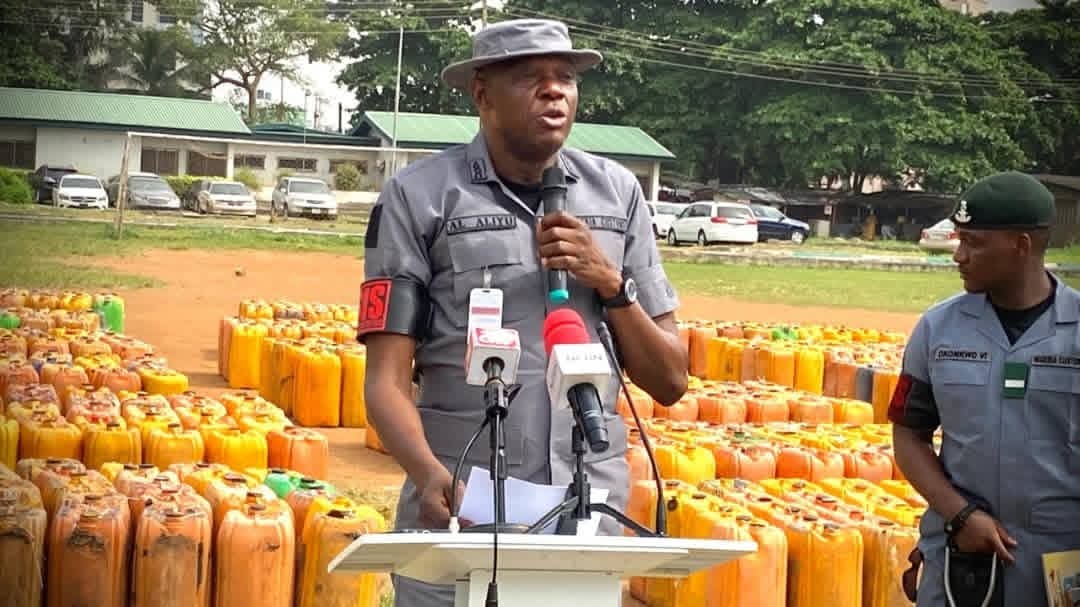
In a decisive move reinforcing Nigeria’s economic and energy security, the Nigeria Customs Service recently intercepted three fuel-laden tankers carrying a total of 154,000 litres of Premium Motor Spirit (PMS) along the Badagry corridor. The operation, led by Operation Whirlwind, showcases the critical role of intelligence-led enforcement in curbing smuggling and protecting the nation’s energy supply.
This report examines the incident in depth, analyzes the operational strategies deployed, highlights the broader implications for economic security, and offers a comprehensive overview of how Nigerian authorities are leveraging intelligence, technology, and inter-agency collaboration to combat petroleum product diversion.
1. Overview of the Interception
Deputy Comptroller Abubakar Aliyu, National Coordinator of Operation Whirlwind, revealed that the seizure occurred after sustained surveillance along the Owode Apa, Seme, and Badagry axes. The tankers contained 60,000 litres, 49,000 litres, and 45,000 litres of PMS, respectively — a total of 154,000 litres — all in violation of regulatory procedures governing the transportation of petroleum products.
This interception was not coincidental. Aliyu emphasized that it was the product of meticulous intelligence gathering, strategic monitoring, and field vigilance, reflecting the Service’s zero-tolerance approach to economic sabotage.
2. Intelligence-Led Enforcement in Action
The Badagry corridor has historically been a hub for illicit cross-border petroleum movements due to its proximity to major trade routes with Benin and other West African states. Operation Whirlwind’s success highlights several key intelligence strategies:
- Surveillance Networks: Officers conducted targeted observation along key checkpoints and border communities, monitoring fuel convoys for irregular movements.
- Human Intelligence (HUMINT): Informants within transport networks provided actionable tips that guided interception points.
- Pattern Analysis: Historical smuggling patterns and logistical footprints were used to predict potential illegal operations.
- Risk Profiling: Tankers and drivers exhibiting unusual behaviors were prioritized for inspection.
The combination of these intelligence methodologies enabled the precise and timely interception of contraband fuel before it reached the black market.
3. Economic Implications of Fuel Diversion
The diversion of PMS has far-reaching consequences for Nigeria’s economy:
- Revenue Loss: Smuggled fuel bypasses taxation and duty, depriving the federal government of significant revenue.
- Price Distortion: Illegal distribution artificially inflates or deflates domestic fuel prices, affecting consumers and businesses.
- Energy Insecurity: When PMS intended for domestic use is exported illicitly, critical sectors such as transportation, power generation, and manufacturing face shortages.
- Encouragement of Organized Crime: Successful smuggling incentivizes criminal networks to expand operations, undermining law enforcement efforts.
By intercepting 154,000 litres, Operation Whirlwind directly curtailed revenue leakage and protected supply chains, ensuring that domestic demand for fuel remains stable.
4. Operational Scale: Beyond Tankers
The recent operation is part of a broader, multi-faceted enforcement effort:
- Within nine weeks, operatives seized 1,630 jerry-cans of PMS, totaling 40,750 litres, with a Duty Paid Value (DPV) of ₦40.75 million.
- These seizures were conducted across critical border points, reflecting a sustained and systematic approach rather than sporadic enforcement.
- The coordinated use of inspection teams, checkpoints, and mobile patrol units ensures continuous coverage of vulnerable economic arteries.
This scale demonstrates that the NCS is capable of executing intelligence-led operations efficiently, repeatedly, and transparently.
5. Regulatory Compliance and Standard Operating Procedures
Petroleum product transportation in Nigeria is tightly regulated:
- Tankers must possess official permits and documentation.
- Loads must match declared quantities.
- Routes must comply with approved corridors.
- All movements are subject to periodic inspection and audit.
The intercepted tankers violated these procedures, highlighting the risk posed by non-compliance and criminal exploitation of regulatory gaps. By enforcing SOPs, the NCS upholds both legality and national interest.
6. Inter-Agency Collaboration
Effective enforcement requires coordination beyond the Customs Service:
- The seized tankers were handed over to the Nigerian Midstream and Downstream Petroleum Regulatory Authority, which ensured proper regulatory action.
- Representatives praised the synergy, emphasizing the importance of multi-agency cooperation in maintaining domestic fuel supply integrity.
- Inter-agency collaboration strengthens intelligence sharing, rapid response, and legal enforcement capacity, creating a robust deterrent against smuggling networks.
7. Transparency and Public Accountability
Operation Whirlwind has prioritized transparency:
- Seized fuel in jerry-cans was auctioned publicly in accordance with regulations.
- This approach prevents diversion from within enforcement ranks.
- Public auctions reinforce confidence in government institutions and demonstrate accountable asset management.
Transparency not only strengthens public trust but also acts as a psychological deterrent to would-be smugglers aware that seized assets cannot be secretly diverted.
8. The Strategic Significance of the Badagry Corridor
Badagry is one of Nigeria’s most sensitive border points:
- Proximity to international markets makes it a hub for both legal and illicit trade.
- Historical exploitation of the corridor by smuggling syndicates underscores its vulnerability.
- Continuous intelligence-led operations ensure that the corridor remains a secure artery for lawful commerce.
By securing Badagry, the NCS safeguards not only economic interests but also regional stability, as fuel smuggling often finances organized criminal and insurgent activities.
9. Lessons for Enforcement and Policy
- Intelligence-Led Operations Are Key: Proactive surveillance and HUMINT yield far better results than reactive enforcement.
- Inter-Agency Cooperation Works: Combined efforts of Customs, Petroleum Authorities, and local enforcement amplify effectiveness.
- Transparency Builds Confidence: Public auctions and accountable seizure processes deter internal corruption.
- Regulatory Compliance Must Be Enforced: Strict adherence to SOPs prevents diversion and establishes predictability in fuel supply.
- Community and Private Sector Engagement: Local transport operators, fuel depots, and community leaders can provide real-time intelligence.
10. Broader Implications for Nigeria’s Energy Security
Smuggling operations undermine domestic fuel supply, threaten industrial production, and can destabilize local markets. By foiling large-scale diversion:
- Domestic PMS availability is stabilized.
- Fuel prices remain less volatile.
- Organized smuggling networks face financial setbacks.
- Security forces reinforce public confidence in governance.
Sustained intelligence-led enforcement is therefore not just a tactical success but a strategic imperative for Nigeria’s national security.
11. Conclusion
The interception of 154,000 litres of PMS along the Badagry corridor illustrates the effectiveness of intelligence-led operations, inter-agency collaboration, and adherence to regulatory standards. Operation Whirlwind demonstrates that proactive, coordinated enforcement can significantly reduce smuggling and protect Nigeria’s economic and energy interests.
The success reinforces a broader principle: in the fight against economic sabotage, intelligence, vigilance, and transparency are as vital as boots on the ground. As Nigeria continues to strengthen border security and regulatory oversight, similar operations are expected to sustain domestic fuel availability and deter future smuggling attempts.

Breaking Security News
Ijaw Youths Warn Tinubu Over Coastal Highway Route, Say South-South Support Could Suffer

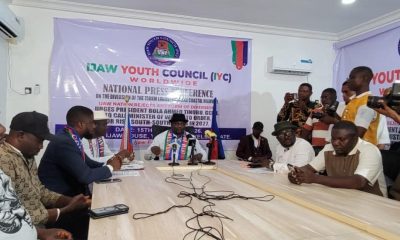
The Ijaw Youth Council (IYC) Worldwide has warned President Bola Tinubu that changing the original route of the Lagos-Calabar Coastal Highway could undermine his administration’s support across Nigeria’s South-South region ahead of the 2027 general elections.
The council urged the Federal Government to retain the highway’s original coastal alignment, arguing that diverting sections of the project towards the existing East-West Road could exclude communities in Edo, Delta, Bayelsa and Rivers states from its anticipated benefits.
The warning was issued on Thursday, October 15, 2026, during a press conference at Ijaw House in Yenagoa, Bayelsa State.
The IYC’s 10-member National Executive Committee, led by its president, Dr Doubra Okotete, expressed concern over statements attributed to the Minister of Works, David Umahi, regarding a possible change to the highway’s route.
Ijaw Youths Demand Original Highway Route
The council maintained that the Lagos-Calabar Coastal Highway should follow its original 750-kilometre coastal corridor, which it said was approved by the Federal Executive Council.
According to the IYC, diverting the route towards the East-West Road could undermine the project’s original objective of improving connectivity and stimulating economic development in coastal communities.
The group insisted that the coastal highway and the East-West Road serve different purposes and should not be treated as interchangeable projects.
It called on Tinubu to direct the Ministry of Works to preserve the approved alignment and ensure that construction progresses along the Edo, Delta, Bayelsa and Rivers sections.
The council also demanded the public release of the approved engineering designs and drawings for the entire highway corridor.
In addition, it urged the Federal Government to direct the project’s contractor to commence work immediately on the affected sections in the South-South.
Council Cites Niger Delta Road Projects
To support its position, the IYC pointed to road and bridge projects in the Niger Delta that it said demonstrated the possibility of constructing major infrastructure across difficult terrain.
The projects cited included the Trans-Kalabari Road in Rivers State, the Port Harcourt-Okrika Road, the Kaa-Ataba Bridge, the Bonny Ring Road and the Gbaregolor-Ogolaha Road in Delta State.
The council argued that engineering challenges should not automatically justify changing the highway’s route or excluding communities that were expected to benefit from the project.
It also criticised comments attributed to former Cross River State Governor Donald Duke, who reportedly questioned the feasibility and cost of continuing with the original coastal alignment.
The IYC offered to sponsor a visit by Duke to Bayelsa and other South-South states to inspect road and bridge projects that it said demonstrated the feasibility of infrastructure development in challenging environments.
Tinubu Faces Political Warning Ahead of 2027
The council warned that diverting the coastal highway could affect public confidence in Tinubu’s administration across the South-South ahead of the 2027 general elections.
It argued that residents of the oil-producing region expected major infrastructure investments to accompany the Federal Government’s development commitments.
The IYC also referred to the political realignments involving Bayelsa State Governor Douye Diri, Delta State Governor Sheriff Oborevwori and Rivers State Governor Siminalayi Fubara, all of whom have been associated with moves towards the All Progressives Congress (APC).
According to the council, these developments had raised expectations that the region would receive greater attention in federal infrastructure planning.
The group warned that changing the highway’s route could weaken support for the President if communities believed they were being denied the project’s promised benefits.
However, the council’s warning represents its position on the issue and does not establish how voters across the South-South will respond in 2027.
Federal Government Defends Coastal Highway Project
The controversy follows recent statements by Umahi, who has maintained that the Lagos-Calabar Coastal Highway project has not been abandoned.
According to reports, the minister said the government intended to undertake additional reconstruction work on approximately 400 kilometres of the East-West Road while continuing the coastal highway project.
Umahi has cited engineering difficulties, flooding risks and challenging ground conditions among the considerations affecting sections of the route.
The government’s position has been that work on the coastal highway is continuing, although questions remain about how the final alignment will affect some communities in the Niger Delta.
The disagreement has prompted calls from regional groups and other stakeholders for greater transparency regarding the approved route, engineering plans and the project’s expected economic benefits.
The IYC acknowledged that a clarification had been issued concerning the highway but said it remained unconvinced that the concerns of affected communities had been adequately addressed.
Council Calls for Urgent Presidential Intervention
The Ijaw Youth Council urged Tinubu to intervene directly and ensure that the highway follows its original coastal corridor.
It maintained that communities in the South-South should not be excluded from major federal infrastructure projects because of regional differences or construction challenges.
The council also called for simultaneous construction across the different sections to accelerate delivery and reassure residents that the original project objectives remained intact.
The dispute over the Lagos-Calabar Coastal Highway has become a wider debate about infrastructure planning, regional development and the distribution of economic opportunities across Nigeria’s southern coastline.
As discussions continue, the final route and the government’s response to the concerns raised by the IYC are likely to remain important issues for communities affected by the project.
Breaking Security News
Senate Orders Probe Into NYSC Member’s Death at Enugu Camp, Healthcare Nationwide

The Nigerian Senate has ordered an investigation into the death of a National Youth Service Corps (NYSC) member, Etimbuk Daniel, at the Enugu State orientation camp amid concerns over medical care and emergency response services at NYSC camps across the country.
The decision followed a motion of urgent public importance sponsored by Senator Aniekan Bassey, who called for a thorough investigation into the circumstances surrounding Daniel’s death and a review of healthcare services available to corps members nationwide.
The Senate also directed relevant committees to examine the condition of medical facilities, the availability of qualified healthcare personnel and emergency referral procedures at orientation camps.
According to reports, Daniel, the immediate past president of the Students’ Union Government (SUG) of Akwa Ibom State University, died after reportedly complaining of a headache while participating in the national service programme in Enugu.
Senate Seeks Answers Over Alleged Medical Delays
Concerns surrounding Daniel’s death emerged after allegations that he did not receive timely and adequate medical attention at the camp clinic.
The National Association of Nigerian Students (NANS) had earlier raised the alarm over the incident.
According to the association’s president, Akinteye Babatunde Afeez, Daniel reportedly complained of a headache and was given medication at the camp clinic. His condition allegedly deteriorated afterwards.
Afeez further claimed that Daniel requested to be taken to a hospital but died before arrangements for his transfer could be completed.
The NANS president also alleged that a doctor subsequently identified the medication administered to Daniel as fake.
These claims have not been presented here as established findings, and the circumstances surrounding the corps member’s death remain subject to investigation.
Committees to Investigate NYSC Healthcare Facilities
Following the adoption of the motion, the Senate directed its Committees on Police Affairs, Judiciary, Human Rights and Legal Matters, Ethics, Code of Conduct and Public Petitions, Youth Development, and Health to investigate the matter.
The committees are expected to work with the Nigeria Police Force and the Department of State Services (DSS) as part of the inquiry.
The investigation will examine the events leading to Daniel’s death and assess whether any failures in medical treatment, emergency response or referral procedures contributed to the incident.
Lawmakers also expressed concern about the adequacy of healthcare facilities at NYSC orientation camps, particularly the availability of trained medical personnel and arrangements for transferring corps members to hospitals during emergencies.
Senators stressed that young Nigerians participating in the national service programme should have access to prompt and appropriate medical care.
Senators Call for Measures to Prevent Future Deaths
During deliberations, lawmakers said Daniel’s death had raised broader questions about the quality of healthcare available to graduates deployed to orientation camps far from their families.
Senator Bassey called for urgent action to establish the facts surrounding the incident and strengthen safeguards for corps members.
Other lawmakers also urged the relevant committees to recommend practical measures to prevent similar incidents in the future.
The Senate subsequently observed a minute of silence in honour of the deceased.
Investigation Expected to Address Wider Concerns
Daniel’s death has renewed public attention on the medical facilities and emergency response arrangements available at NYSC orientation camps nationwide.
The outcome of the Senate’s investigation could help identify weaknesses in existing healthcare arrangements and determine what changes may be needed to improve the safety and welfare of corps members.
For now, the allegations surrounding the treatment Daniel received remain subject to investigation. The Senate’s inquiry is expected to establish the circumstances of his death and determine whether any lapses occurred.
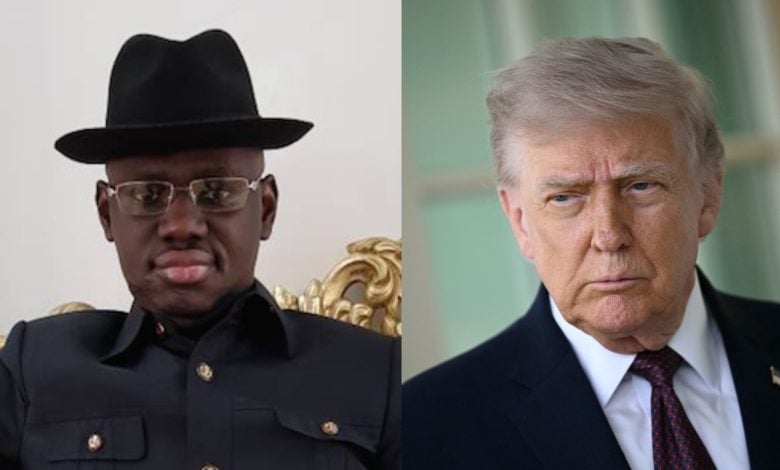
Former Deputy National Publicity Secretary of the All Progressives Congress (APC), Timi Frank, has appealed to United States President Donald Trump to send a high-level delegation to Nigeria ahead of the 2027 general elections to support efforts to ensure a free, fair and credible electoral process.
Frank made the appeal in an open letter titled “No Mandate From Fraud: Election 2027,” dated October 13, 2026.
In the letter, the former APC spokesman urged the US government to engage Nigerian political leaders, electoral authorities and relevant institutions before the elections, rather than waiting until disputes emerge after voting.
He argued that early international engagement could help strengthen public confidence in Nigeria’s electoral system and encourage political stakeholders to respect democratic principles.
According to Frank, credible elections are essential for accountable leadership, national stability and economic development.
Timi Frank Calls for US Engagement Ahead of 2027 Polls
Frank urged the Trump administration to consider deploying a senior delegation to Nigeria to engage with political parties, the Independent National Electoral Commission (INEC), security agencies and other stakeholders.
He said discussions should begin well before election day to establish clear expectations for the conduct of the polls and encourage electoral institutions to perform their duties without political interference.
“The time to act is before the elections, not after,” Frank said in his appeal.
He maintained that international partners could support Nigeria’s democratic process by encouraging transparency, accountability and compliance with electoral laws.
However, he acknowledged that the primary responsibility for conducting credible elections rests with Nigerian institutions.
APC Chieftain Raises Concerns Over INEC
The former APC official also expressed concern about public confidence in the Independent National Electoral Commission.
Frank argued that trust in the electoral body would be critical to ensuring that Nigerians accept the outcome of the 2027 elections.
He urged electoral officials to demonstrate impartiality and ensure that political parties and candidates are treated fairly throughout the electoral process.
He also called on the relevant institutions to address allegations of electoral misconduct and ensure that those found responsible for violations are held accountable in accordance with the law.
Frank’s appeal comes as political parties and other stakeholders intensify preparations for the next general elections.
Frank Calls for Accountability Over Electoral Offences
Beyond requesting a US delegation, Frank urged Washington to consider targeted sanctions against electoral officials, judicial officers and security personnel found responsible for manipulating elections.
The proposed measures include visa restrictions, asset freezes and financial restrictions against individuals established to have engaged in electoral misconduct.
He argued that accountability should apply regardless of political affiliation, official position or influence.
Frank also called for cooperation between the United States and other international partners to promote democratic standards and discourage actions capable of undermining the credibility of elections.
His proposal places particular emphasis on preventing electoral malpractice before it occurs rather than relying solely on litigation and other remedies after election results have been announced.
Security Agencies and Judiciary Also Under Focus
Frank highlighted the roles of security agencies and the judiciary in ensuring credible elections.
He said security personnel should protect voters, electoral officials and election materials without favouring any political party or candidate.
He also stressed that judicial officers must handle election-related disputes professionally and in accordance with the law.
According to him, the conduct of these institutions could influence public confidence in the electoral process and citizens’ willingness to participate in elections.
Frank urged the relevant authorities to demonstrate independence and professionalism throughout the election period.
Frank Links Credible Elections to Nigeria’s Development
The former APC chieftain also connected electoral integrity to Nigeria’s wider economic and governance challenges.
He argued that credible elections could help strengthen public accountability and improve confidence in government institutions.
Frank further called for stronger cooperation between Nigeria and the United States in areas including security, energy development and economic partnerships.
He maintained that international engagement on electoral matters should complement broader diplomatic relations between both countries.
The 2027 general elections are expected to be a major political event, with political parties preparing for contests across the country.
Although Frank has called for greater US involvement, the responsibility for organising and conducting Nigeria’s elections remains with the country’s constitutionally established institutions.
His proposal adds to ongoing discussions about electoral reform, institutional independence and the role international partners can play in supporting democratic processes.
As preparations continue, the actions of INEC, political parties, security agencies and other relevant institutions will remain central to public confidence in the elections.
 Crime & Conflict3 days ago
El-Rufai Faces Fresh Allegations as Witness Tells Court of $600,000 EFCC Payment Plan
- Terrorism & Insurgency1 day ago
Bandits Demand ₦500 Million Ransom for Pregnant Woman Abducted in Kaduna
- Breaking Security News3 days ago
INEC Explains Why Pantami, Adebutu Were Omitted From 2027 Governorship Candidates List
- Breaking Security News3 days ago
2027 Elections: Timi Frank Asks Trump to Send US Delegation to Nigeria
- Terrorism & Insurgency3 days ago
Ribadu Raises Alarm as Terrorists Turn to AI, Cryptocurrency and Drones
- Crime & Conflict1 day ago
Lawyers Ask EFCC to Remove Photos of Clients Facing Corruption Charges
- Breaking Security News1 day ago
Senate Orders Probe Into NYSC Member’s Death at Enugu Camp, Healthcare Nationwide
- Breaking Security News1 day ago
Ijaw Youths Warn Tinubu Over Coastal Highway Route, Say South-South Support Could Suffer