
Crime & Conflict
₦33.2 Billion Arms Procurement Trial: EFCC Witness Details How Public Funds Allegedly Moved From ONSA to Private Use


The long-running trial linked to the alleged misappropriation of ₦33.2 billion earmarked for arms procurement resumed on January 13, 2026, at the Federal Capital Territory (FCT) High Court, Maitama, with fresh testimony shedding light on how large sums of public funds were allegedly diverted for private transactions.
At the centre of the case is Colonel Sambo Dasuki (retd.), a former National Security Adviser (NSA), who is standing trial alongside other defendants on multiple counts bordering on criminal breach of trust and dishonest misappropriation of public funds.
Presiding over the proceedings is Justice Charles O. Agbaza, while the prosecution is led by Rotimi Jacobs, SAN, on behalf of the Economic and Financial Crimes Commission (EFCC).
Witness Takes the Stand
The prosecution’s first witness, Dr. Michael Adariku, an investigator with the EFCC, took the stand as PW1, presenting what he described as a forensic breakdown of financial transactions allegedly traced to the Office of the National Security Adviser (ONSA).
Dr. Adariku told the court that his testimony was based on:
- Bank statements
- Transaction records
- EFCC interviews with beneficiaries
- Documentary exhibits already admitted into evidence
He emphasized that the investigation focused on tracing funds disbursed from the ONSA account to determine whether they were applied strictly for national security purposes or diverted elsewhere.
The ONSA Account at the Centre of the Case
According to the witness, the funds originated from an ONSA account domiciled with Zenith Bank, with account number 1014199287.
He told the court that between April and May 2015, multiple transfers running into hundreds of millions of naira were made from this account to various corporate and individual beneficiaries.
The prosecution alleges that many of these transactions bore no direct link to arms procurement or security-related services, despite being drawn from funds allocated for national defence.
₦600 Million Transfer to Acacia Holdings Limited
Dr. Adariku testified that on April 17, 2015, a sum of ₦600 million was transferred from the ONSA account to Acacia Holdings Limited, an entity listed among the defendants.
He told the court that prior to receiving the transfer, the balance in Acacia Holdings’ account stood at ₦27,094.49, a figure he said was confirmed through bank records.
According to the prosecution, this sudden inflow of funds raised red flags during the investigation, prompting further scrutiny of subsequent transactions involving the company.
₦60 Million Paid for Land Through an Islamic Academy
The witness further told the court that on April 23, 2015, a transfer of ₦60 million was made to Hidayatul Atfaaf Islamic Academy.
During EFCC interrogation, the proprietor of the academy, Mohammed Bashir, reportedly confirmed receiving the funds. He allegedly disclosed that the money represented part payment for land measuring 3.62 hectares in Kyami District, Abuja, located opposite Centenary City along Airport Road.
According to Dr. Adariku, the land was allegedly acquired by the second defendant, Aminu Baba Kusa, a former General Manager of the Nigerian National Petroleum Corporation (NNPC).
The total cost of the land, the witness said, was ₦120 million, with the ₦60 million forming part of the purchase price.
Payments to Bureau de Change and Property Firms
The EFCC investigator told the court that also on April 23, 2015, a total of ₦25 million was transferred to Zavati BDC Ltd, owned by Abdulrahman Aliu, in three tranches.
Following EFCC questioning, Aliu allegedly disclosed that the funds were part payment for a property identified as Hospitality Property Limited, valued at ₦40 million.
The witness stated that the outstanding balance of ₦15 million was allegedly paid through Ibrahim Saleh Uba, described as a business facilitator and agent to the second defendant.
Unexplained Transfers and Land-Related Payments
On April 24, 2015, Dr. Adariku testified that transfers amounting to ₦124 million were made from the ONSA account, but he noted that no clear narration or justification was attached to the transactions.
He also told the court that on April 27, 2015, further payments were made, including:
- ₦600,157 to the Department of Development Control, FCT, allegedly for land-related statutory charges
- ₦8.1 million paid to Ibrahim Saleh Uba, said to be for survey and beacon processing on lands located in Kwali, Wasa District, Kyami District, and the Central Area of Abuja
₦50 Million for Large-Scale Land Acquisition
The witness further disclosed that ₦50 million was transferred in five tranches of ₦10 million each to Squad Developers Nigeria Limited, owned by Sunday Gugu.
According to Dr. Adariku, EFCC investigations revealed that the payment was a part payment for 118.2132 hectares of land located at Stadium Layout, Kwali, FCT.
The land was allegedly purchased for ₦75 million, with the balance of ₦25 million paid through Ibrahim Saleh Uba, acting as an intermediary.
Transactions Linked to Foreign Currency Transfers
One of the most complex aspects of the testimony involved alleged foreign currency movements.
Dr. Adariku told the court that on April 28, 2015, a total of ₦55,923,000 was transferred in six tranches to Fastman Investment Ltd.
The CEO of Fastman Holding Group, Farouk Suleiman, reportedly confirmed during EFCC interrogation that he was contacted to facilitate the transfer of USD 1 million to a client in Saudi Arabia, identified as Dr. Suleiman Al-Abib of Medical Practice Services.
However, the witness said that only USD 630,000 was eventually transferred.
To fund the dollar transfer, additional naira payments were allegedly made from Reliance Referral Hospital Limited (RRHL) to Fastman Investment Ltd to cover the exchange value.
Payments to Individuals and Medical Practice Limited
Dr. Adariku further testified that on April 30, 2015, two payments — ₦4.86 million and ₦29.1 million — were transferred to O.A. Akinrimade.
He also told the court that ₦70 million was transferred in two tranches to Medical Practice Limited, a company allegedly linked to the wife of the second defendant, Mrs. Hauwa, who reportedly holds 1.8 million shares in the company.
On May 4, 2015, another ₦80 million was transferred to the same company.
“In summary, between April 1 and May 6, 2015, a cumulative sum of ₦150 million was transferred to Medical Practice Limited,” the witness told the court.
Funds Allegedly Moved Overseas
Continuing his testimony, Dr. Adariku disclosed that on May 15, 2015, a total of ₦23,696,250 was transferred in three tranches to Namuduka Ventures Ltd, owned by Murtala Bashir.
According to the EFCC investigator, Bashir disclosed during questioning that the funds were converted to USD 200,000 and transferred to Blue Lake Management Consultancy Ltd, a UK-based account allegedly linked to the second defendant.
Additional Euro Transfers to UK Accounts
The witness also testified that further transfers amounting to ₦56.38 million from Medical Practice Ltd, Acacia Holdings Ltd, and Reliance Referral Hospital Ltd were converted to €233,944 and transferred to a UK cash-card account operated by Furnishing Touches.
On May 13, 2015, another ₦23.77 million was allegedly converted to €65,075 and transferred to a Furnishing Touches clearing account.
An additional ₦2.22 million was converted to €1,500 and transferred to a Business Free MT account in the UK.
Court Adjournment and Status of the Case
After the conclusion of the witness’s testimony for the day, Justice Agbaza adjourned proceedings to January 14, 2026, for continuation of trial.
The court is expected to hear further evidence, including additional witnesses and documentary exhibits tendered by the prosecution.
Background to the Charges
The EFCC had earlier re-arraigned Colonel Sambo Dasuki (retd.), Aminu Baba Kusa, Acacia Holdings Limited, and Reliance Referral Hospital Limited on March 25, 2025.
They are facing a 32-count charge, alleging the misappropriation of ₦33.2 billion meant for arms procurement during Nigeria’s counterinsurgency operations.
All defendants have pleaded not guilty, and the trial continues in accordance with due process.
Public Interest and National Implications
The case remains one of Nigeria’s most closely watched financial crime trials due to:
- The scale of funds involved
- Its implications for national security spending
- The broader conversation around transparency and accountability in public finance
Legal analysts note that the outcome could have long-term implications for how security funds are managed and audited in Nigeria.
Conclusion
As the trial progresses, the court continues to examine detailed financial records to determine whether funds released for national defence were lawfully applied or diverted for private purposes.
The testimony of Dr. Michael Adariku represents one phase of the prosecution’s case, with the defence expected to challenge the allegations through cross-examination and its own evidence.
Until judgment is delivered, all allegations remain subject to judicial determination.

Lawyers Ask EFCC to Remove Photos of Clients Facing Corruption Charges
Lawyers representing two defendants facing corruption-related charges have asked the Economic and Financial Crimes Commission (EFCC) to remove their clients’ names and photographs from media publications linked to their ongoing criminal trial.
The lawyers argued that publishing the identities of the defendants in connection with the allegations could damage their reputations and create the impression that they had already been found guilty before the court reached a verdict.
The petition was submitted by J Aboje & Co., also known as Compass Chambers, on behalf of Folashade Oketope, a former chairwoman of the committee responsible for the sale of Federal Government houses in Abuja, and Mohammed Kabir Usman, a staff member of the Federal Capital Territory Administration (FCTA).
In a letter dated October 13, 2026, and addressed to the EFCC chairman, the law firm described the publications as an infringement on its clients’ constitutional rights, particularly the presumption of innocence and the right to dignity.
Lawyers Cite Presumption of Innocence
According to the petition, the letter followed an earlier correspondence dated July 28, 2026, concerning the publication of the defendants’ arraignment.
Oketope and Usman were arraigned before the Federal Capital Territory High Court in Jabi, Abuja, on July 13, 2026, on a three-count charge involving alleged conspiracy, breach of trust, corruption and the unlawful sale of government properties.
The allegations relate to the sale of four properties identified as Houses 3, 4, 7 and 8 at Plot 756, Abubakar Usman Crescent, Jabi, Abuja.
Oketope previously chaired the committee responsible for the sale of Federal Government houses in Abuja, while Usman was an FCTA employee seconded to the committee.
Their lawyers maintain that the defendants have not been convicted and should not be publicly portrayed as criminals while the case remains before the court.
The legal team also questioned whether the EFCC obtained permission from the court before publishing their clients’ names and photographs.
In the petition, the lawyers challenged the commission to explain whether it would apologise and withdraw the publications if the defendants were eventually acquitted.
Dispute Over Government Properties
The lawyers also referred to a separate case, identified as FCT/HC/CV/4094/2025, which they said was pending when the criminal proceedings began.
According to the petition, the separate suit concerns whether the properties in question belonged to the Federal Government and whether the committee could lawfully dispose of them.
The lawyers argued that the unresolved issues surrounding the ownership and sale of the properties should be considered alongside the criminal proceedings.
They urged the EFCC chairman to direct the removal of the disputed publications from all platforms where they appeared.
The legal team maintained that the defendants should be allowed to defend themselves in court without being subjected to what they described as prejudicial public exposure.
EFCC Reviewing Petition
The EFCC had not publicly responded to the specific allegations in the petition as of the time of the report.
However, a senior commission official, who spoke anonymously because they were not authorised to comment publicly, confirmed that the agency had received the petition.
The official reportedly said the commission’s legal team was reviewing the matter.
The dispute highlights the debate over how anti-corruption agencies communicate information about ongoing prosecutions while respecting the rights of defendants who have not been convicted.
For now, the request to remove the photographs remains a demand by the defendants’ lawyers, and the outcome of the ongoing court proceedings will determine the criminal allegations against their clients.
Crime & Conflict
₦110.4bn Fraud Trial: Witness Explains ₦1.425bn Forex Transactions Linked to Yahaya Bello Case
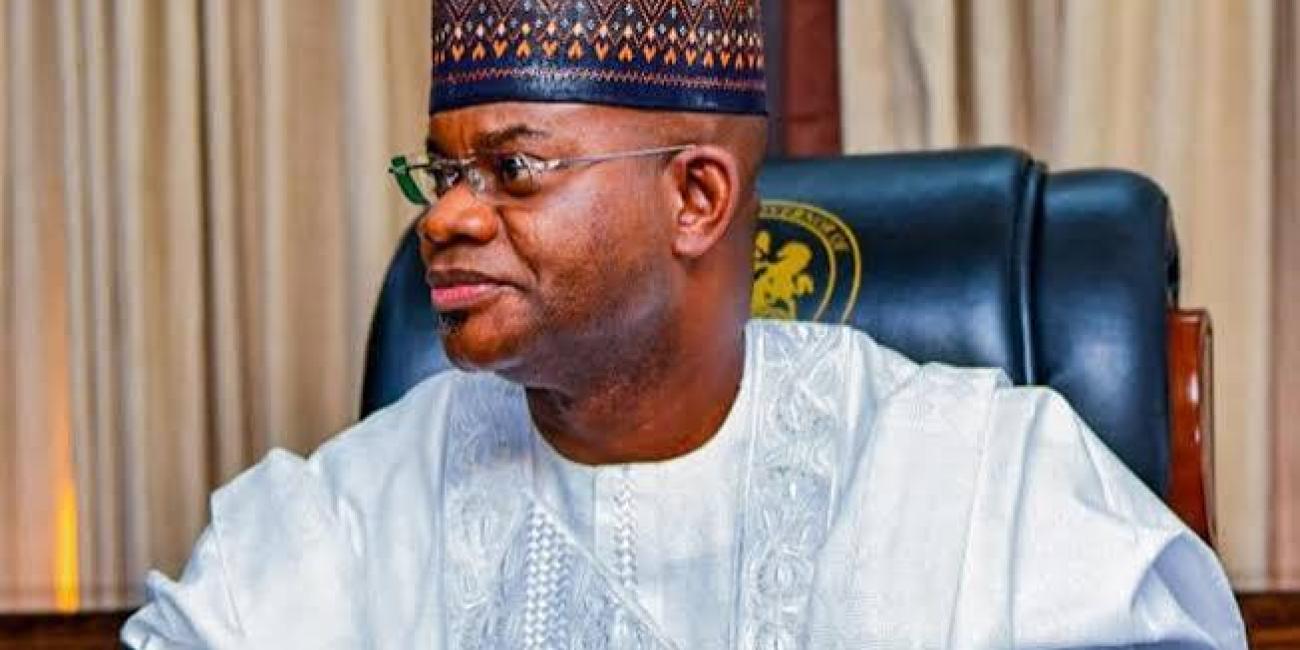
A bureeau de change operator, Jamilu Abdullahi, has told a court in Abuja that he handled foreign exchange transactions worth ₦1.425 billion on behalf of Abba Adaudu between December 2021 and February 2022.
Abdullahi, the 19th prosecution witness in the ongoing trial of former Kogi State Governor Yahaya Bello, gave the testimony on Thursday, October 15, 2026, before Justice Maryanne Anineh of the Federal Capital Territory High Court in Maitama, Abuja.
According to the witness, the transactions involved funds deposited into accounts associated with him and his company, Kunfayakun Global Limited. He told the court that the money was used to purchase foreign currencies, which he subsequently delivered to Adaudu.
The Economic and Financial Crimes Commission (EFCC) is prosecuting Bello alongside Umar Shuaibu Oricha and Abdulsalami Hudu over an alleged ₦110.4 billion fraud and money laundering scheme. The defendants are facing a 16-count charge.
Witness Explains Bank Transactions
While being led in evidence by prosecution counsel Kemi Pinheiro, SAN, Abdullahi identified several bank deposits and transfers recorded in accounts linked to him and his company.
He explained that some deposits of ₦10 million each made through a bank branch in Lokoja were connected to foreign exchange transactions arranged by Adaudu.
The witness maintained that the payments were not gifts but funds intended for purchasing United States dollars.
However, when questioned about other deposits recorded in his name, including transactions of ₦9 million and ₦8 million, Abdullahi denied making the deposits personally.
He told the court that he had never visited the Lokoja branch where some of the transactions were recorded, adding that his name could appear in transaction records as a beneficiary even when another person initiated the payment.
Abdullahi also identified several transfers involving companies he said were associated with Adaudu. He maintained that the funds were used for foreign exchange transactions and that he delivered the purchased currencies to Adaudu.
Witness Discusses School Fee Payments
The court also heard testimony concerning payments made to the American International School, Abuja.
Abdullahi said he processed school fee payments using account details and instructions provided by Adaudu. He identified Fatima Bello, Zahra Bello and Na’ima Bello as names familiar to him in connection with the transactions.
He further identified receipts presented in court as evidence of payments made to the school, explaining that he forwarded the receipts to Adaudu after completing the transactions.
During cross-examination by Abdullahi Yahaya, SAN, counsel to the first and second defendants, the witness said he had no direct dealings with any of the defendants.
When asked about the total amount he handed over to Adaudu, Abdullahi said he could not remember the exact figure because of the numerous transactions involved.
Court Adjourns Trial
Following the testimony, Justice Anineh adjourned the case until October 27 and November 24, 2026, for the continuation of proceedings.
The EFCC’s case centres on allegations that public funds belonging to Kogi State were unlawfully diverted and laundered. Bello and his co-defendants are facing prosecution over the allegations, which remain before the court.
The latest testimony forms part of the prosecution’s evidence in the ongoing trial. The allegations have yet to be determined by the court.

A Magistrate Court sitting in Bolade, Oshodi, Lagos State, has sentenced six men to two years in prison each for assaulting officials of the Lagos State Environmental Sanitation Corps, popularly known as Kick Against Indiscipline (KAI).
The conviction was announced on Thursday, October 15, 2026, by the Lagos State Commissioner for the Environment and Water Resources, Tokunbo Wahab.
According to Wahab, the six men were arrested in the Alakija area of Lagos on October 10 following an incident involving the assault of KAI officers who were carrying out their official duties.
The suspects were subsequently arraigned before the Magistrate Court in Bolade, Oshodi, where they pleaded guilty to the charges against them.
Following their guilty pleas, the court convicted each of the defendants and sentenced them to two years’ imprisonment.
The convicted men were identified as Ghadafi Ismail, Balarabe Mustapha, Usman Danladi, Abdullahi Bello, Kamala Garuba and Musa Idris.
Reacting to the development, Wahab stressed the importance of respecting public officials who carry out lawful duties on behalf of the government.
He warned that the Lagos State Government would not tolerate violence against enforcement officers, adding that offenders would face the consequences of their actions under the law.
The commissioner also urged residents to allow government officials to perform their statutory responsibilities without intimidation, obstruction or physical attacks.
The development underscores the state government’s position on protecting public officers and enforcing environmental regulations across Lagos State.
 Crime & Conflict2 days ago
El-Rufai Faces Fresh Allegations as Witness Tells Court of $600,000 EFCC Payment Plan
- Terrorism & Insurgency2 days ago
Ribadu Raises Alarm as Terrorists Turn to AI, Cryptocurrency and Drones
- Breaking Security News2 days ago
2027 Elections: Timi Frank Asks Trump to Send US Delegation to Nigeria
- Breaking Security News2 days ago
INEC Explains Why Pantami, Adebutu Were Omitted From 2027 Governorship Candidates List
- Crime & Conflict9 hours ago
₦110.4bn Fraud Trial: Witness Explains ₦1.425bn Forex Transactions Linked to Yahaya Bello Case
- Terrorism & Insurgency8 hours ago
Bandits Demand ₦500 Million Ransom for Pregnant Woman Abducted in Kaduna
- Crime & Conflict9 hours ago
Lagos Court Sentences Six Men to Two Years in Prison for Assaulting KAI Officers
- Crime & Conflict8 hours ago
Lawyers Ask EFCC to Remove Photos of Clients Facing Corruption Charges


