
Crime & Conflict
Troops Neutralise Terrorists, Free 62 Kidnap Victims in Coordinated Kebbi and Zamfara Operations

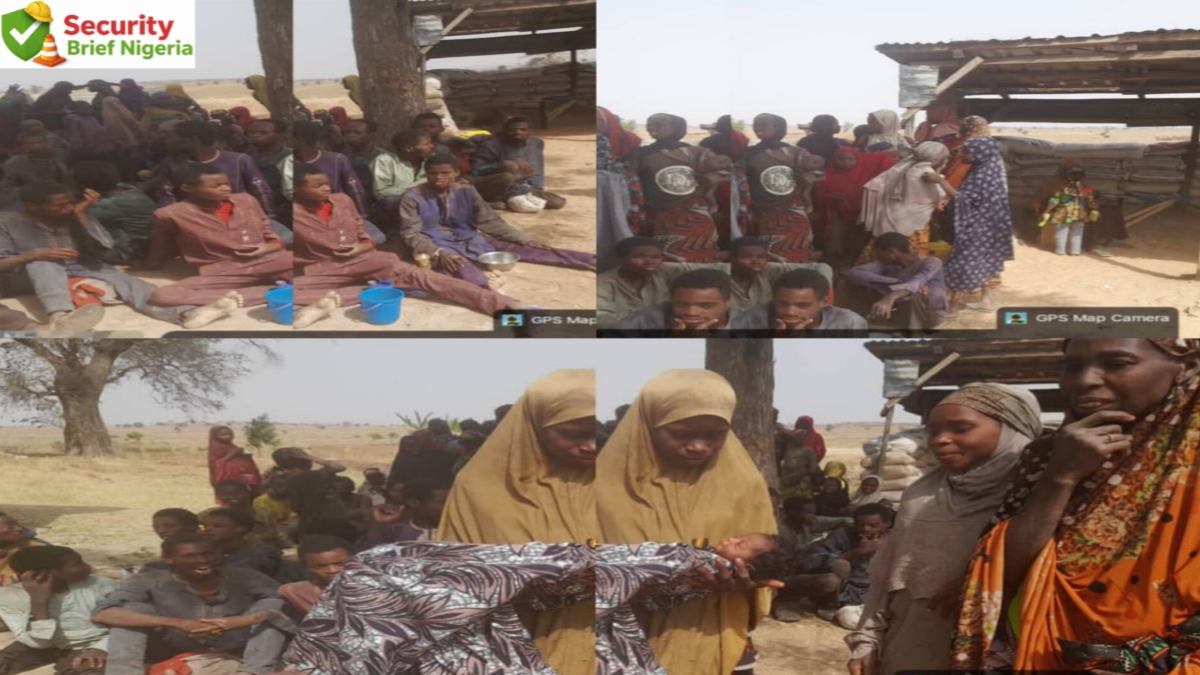
Security forces operating under the Joint Task Force North West, Operation FANSAN YAMMA, have recorded another major breakthrough in the ongoing fight against terrorism and banditry in Nigeria’s North-West region. In a series of intelligence-driven operations conducted across Kebbi and Zamfara States, troops successfully neutralised armed terrorists and rescued dozens of civilians who had been held captive in forest hideouts.
The Nigerian Army confirmed that the coordinated missions led to the elimination of two terrorists in Kebbi State and the rescue of 62 kidnapped victims in Zamfara State, marking yet another significant step in efforts to restore peace, protect rural communities, and dismantle criminal networks operating across the region.
The development was disclosed in an official statement issued on Wednesday by the Acting Deputy Director of Army Public Relations, 8 Division/Sector 2, Lieutenant Colonel Olaniyi Osoba, who highlighted the operational successes as part of sustained clearance and rescue operations under Operation FANSAN YAMMA.
Intelligence-Led Ambush in Kebbi State
According to the Army, the operation in Kebbi State was launched following credible and actionable intelligence on the movement of suspected members of the Lakurawa terrorist group, a criminal faction known for cross-border operations and attacks on rural communities.
The intelligence indicated that the terrorists were attempting to move through areas close to the border between Augie Local Government Area of Kebbi State and Binji Local Government Area of Sokoto State, using motorcycles to evade detection and exploit difficult terrain.
Acting swiftly on the intelligence, troops of Sector 2 carefully planned and executed a tactical ambush along a suspected route near Kerani village, an area previously identified as vulnerable to terrorist movement.
When the armed men rode into the ambush point, troops engaged them in a brief but decisive encounter.
Two Terrorists Neutralised, Equipment Recovered
The Army said the encounter resulted in the neutralisation of two terrorists, effectively halting their movement and preventing potential attacks on nearby communities.
In addition to the neutralisation, troops recovered two motorcycles believed to have been used for operational mobility by the terrorists.
A closer inspection of the items recovered at the scene revealed the level of preparation and sophistication employed by the criminal elements. The neutralised terrorists were reportedly dressed in camouflage uniforms, an indication of their attempt to impersonate security forces or blend into forest environments.
Their motorcycles were said to be padded with thick blankets, a tactic often used by armed groups to reduce fatigue during long journeys and protect riders from harsh terrain. The motorcycles were also fitted with equipment designed for extended movement, including hand-operated tyre pumps, suggesting that the terrorists were prepared for long-distance travel without relying on populated areas.
Military sources noted that such preparations further confirm the organised nature of terrorist activities in the region and the importance of intelligence-driven operations to disrupt their logistics and movement.
Zamfara Operation Targets Notorious Bandit Hideout
In a separate but equally significant operation, troops of Operation FANSAN YAMMA turned their attention to Zamfara State, where banditry and mass kidnappings have remained a major security challenge.
Lieutenant Colonel Osoba disclosed that troops received intelligence indicating that a large number of kidnapped civilians were being held in Munhaye Forest, a known hideout linked to the notorious bandit leader Kachalla Alti.
Munhaye Forest has long been identified by security agencies as a key sanctuary for armed groups involved in kidnappings, cattle rustling, and attacks on villages across parts of Zamfara and neighbouring states.
Acting on the intelligence, troops launched a decisive clearance and rescue operation, carefully advancing into the forest to avoid harm to the captives while engaging any hostile elements encountered along the way.
62 Hostages Rescued Alive
The operation culminated in the successful rescue of 62 kidnapped victims, including men, women, and possibly children, who had been held under harsh conditions by their abductors.
The Army confirmed that all rescued victims were freed alive and immediately moved to a secure location, where they are currently receiving care and protection.
Military sources described the rescue as a major morale boost for both affected communities and security personnel, noting that mass rescues not only save lives but also weaken the operational and financial strength of bandit groups who rely heavily on ransom payments.
Post-Rescue Care and Family Reunification
According to the Army, arrangements are already underway to ensure the safe return of the rescued victims to their respective families and communities.
Lieutenant Colonel Osoba explained that the victims are undergoing preliminary screening, medical checks, and necessary psychological support to help them recover from the trauma of captivity.
Once the screening process is completed, the rescued individuals will be formally reunited with their families in collaboration with relevant authorities and community leaders.
Security experts have repeatedly stressed the importance of post-rescue support, noting that victims of kidnapping often suffer physical exhaustion, emotional distress, and long-term psychological effects.
Joint Effort with Security Agencies and Vigilantes
The Army spokesperson emphasised that the successes recorded in Kebbi and Zamfara were not achieved in isolation. He noted that the operations were conducted in close coordination with other security agencies, as well as local vigilante groups who provided valuable intelligence and terrain knowledge.
This collaborative approach, according to the Army, reflects a growing synergy among stakeholders in the fight against insecurity in the North-West.
Local vigilantes, community leaders, and intelligence sources have played an increasingly important role in identifying criminal hideouts, tracking movements, and alerting troops to imminent threats.
Operation FANSAN YAMMA’s Expanding Impact
Operation FANSAN YAMMA was launched as a renewed and aggressive security framework aimed at neutralising terrorists, dismantling bandit camps, and restoring normalcy across affected states in the North-West.
Since its inception, the operation has recorded multiple successes, including the destruction of bandit enclaves, recovery of weapons, rescue of kidnapped victims, and the disruption of supply routes used by criminal groups.
Military analysts say the recent operations in Kebbi and Zamfara demonstrate a shift toward proactive, intelligence-led engagements, rather than reactive responses after attacks have already occurred.
Message to Criminal Elements
“These successes reflect the relentless efforts of Operation FANSAN YAMMA and its partners to dismantle criminal networks, restore security, and protect lives across the region,” Lieutenant Colonel Osoba stated.
Security observers believe the latest operations send a strong message to terrorist and bandit groups that no hideout is beyond the reach of security forces, even in difficult forest terrains.
The elimination of armed terrorists and the rescue of a large number of captives also serve as reassurance to local communities that sustained military pressure is gradually yielding results.
Hope for Affected Communities
For residents of rural Kebbi, Zamfara, and neighbouring states, the news offers a measure of hope after years of fear, displacement, and economic disruption caused by banditry and terrorism.
Farmers, traders, and commuters have been among the worst affected, with many abandoning farmlands and villages due to repeated attacks and kidnappings.
Community leaders have continued to call for sustained operations, improved intelligence gathering, and long-term development initiatives to address the root causes of insecurity.
Conclusion
The latest successes recorded by troops of Operation FANSAN YAMMA in Kebbi and Zamfara underscore the importance of coordinated, intelligence-driven military operations in tackling complex security challenges.
With two terrorists neutralised, critical equipment recovered, and 62 innocent civilians rescued from captivity, the operations highlight measurable progress in the fight against banditry and terrorism in Nigeria’s North-West.
As security forces continue to press forward, authorities say collaboration with communities, vigilance, and sustained operational momentum will remain key to achieving lasting peace in the region.


Lawyers Ask EFCC to Remove Photos of Clients Facing Corruption Charges
Lawyers representing two defendants facing corruption-related charges have asked the Economic and Financial Crimes Commission (EFCC) to remove their clients’ names and photographs from media publications linked to their ongoing criminal trial.
The lawyers argued that publishing the identities of the defendants in connection with the allegations could damage their reputations and create the impression that they had already been found guilty before the court reached a verdict.
The petition was submitted by J Aboje & Co., also known as Compass Chambers, on behalf of Folashade Oketope, a former chairwoman of the committee responsible for the sale of Federal Government houses in Abuja, and Mohammed Kabir Usman, a staff member of the Federal Capital Territory Administration (FCTA).
In a letter dated October 13, 2026, and addressed to the EFCC chairman, the law firm described the publications as an infringement on its clients’ constitutional rights, particularly the presumption of innocence and the right to dignity.
Lawyers Cite Presumption of Innocence
According to the petition, the letter followed an earlier correspondence dated July 28, 2026, concerning the publication of the defendants’ arraignment.
Oketope and Usman were arraigned before the Federal Capital Territory High Court in Jabi, Abuja, on July 13, 2026, on a three-count charge involving alleged conspiracy, breach of trust, corruption and the unlawful sale of government properties.
The allegations relate to the sale of four properties identified as Houses 3, 4, 7 and 8 at Plot 756, Abubakar Usman Crescent, Jabi, Abuja.
Oketope previously chaired the committee responsible for the sale of Federal Government houses in Abuja, while Usman was an FCTA employee seconded to the committee.
Their lawyers maintain that the defendants have not been convicted and should not be publicly portrayed as criminals while the case remains before the court.
The legal team also questioned whether the EFCC obtained permission from the court before publishing their clients’ names and photographs.
In the petition, the lawyers challenged the commission to explain whether it would apologise and withdraw the publications if the defendants were eventually acquitted.
Dispute Over Government Properties
The lawyers also referred to a separate case, identified as FCT/HC/CV/4094/2025, which they said was pending when the criminal proceedings began.
According to the petition, the separate suit concerns whether the properties in question belonged to the Federal Government and whether the committee could lawfully dispose of them.
The lawyers argued that the unresolved issues surrounding the ownership and sale of the properties should be considered alongside the criminal proceedings.
They urged the EFCC chairman to direct the removal of the disputed publications from all platforms where they appeared.
The legal team maintained that the defendants should be allowed to defend themselves in court without being subjected to what they described as prejudicial public exposure.
EFCC Reviewing Petition
The EFCC had not publicly responded to the specific allegations in the petition as of the time of the report.
However, a senior commission official, who spoke anonymously because they were not authorised to comment publicly, confirmed that the agency had received the petition.
The official reportedly said the commission’s legal team was reviewing the matter.
The dispute highlights the debate over how anti-corruption agencies communicate information about ongoing prosecutions while respecting the rights of defendants who have not been convicted.
For now, the request to remove the photographs remains a demand by the defendants’ lawyers, and the outcome of the ongoing court proceedings will determine the criminal allegations against their clients.
Crime & Conflict
₦110.4bn Fraud Trial: Witness Explains ₦1.425bn Forex Transactions Linked to Yahaya Bello Case

A bureeau de change operator, Jamilu Abdullahi, has told a court in Abuja that he handled foreign exchange transactions worth ₦1.425 billion on behalf of Abba Adaudu between December 2021 and February 2022.
Abdullahi, the 19th prosecution witness in the ongoing trial of former Kogi State Governor Yahaya Bello, gave the testimony on Thursday, October 15, 2026, before Justice Maryanne Anineh of the Federal Capital Territory High Court in Maitama, Abuja.
According to the witness, the transactions involved funds deposited into accounts associated with him and his company, Kunfayakun Global Limited. He told the court that the money was used to purchase foreign currencies, which he subsequently delivered to Adaudu.
The Economic and Financial Crimes Commission (EFCC) is prosecuting Bello alongside Umar Shuaibu Oricha and Abdulsalami Hudu over an alleged ₦110.4 billion fraud and money laundering scheme. The defendants are facing a 16-count charge.
Witness Explains Bank Transactions
While being led in evidence by prosecution counsel Kemi Pinheiro, SAN, Abdullahi identified several bank deposits and transfers recorded in accounts linked to him and his company.
He explained that some deposits of ₦10 million each made through a bank branch in Lokoja were connected to foreign exchange transactions arranged by Adaudu.
The witness maintained that the payments were not gifts but funds intended for purchasing United States dollars.
However, when questioned about other deposits recorded in his name, including transactions of ₦9 million and ₦8 million, Abdullahi denied making the deposits personally.
He told the court that he had never visited the Lokoja branch where some of the transactions were recorded, adding that his name could appear in transaction records as a beneficiary even when another person initiated the payment.
Abdullahi also identified several transfers involving companies he said were associated with Adaudu. He maintained that the funds were used for foreign exchange transactions and that he delivered the purchased currencies to Adaudu.
Witness Discusses School Fee Payments
The court also heard testimony concerning payments made to the American International School, Abuja.
Abdullahi said he processed school fee payments using account details and instructions provided by Adaudu. He identified Fatima Bello, Zahra Bello and Na’ima Bello as names familiar to him in connection with the transactions.
He further identified receipts presented in court as evidence of payments made to the school, explaining that he forwarded the receipts to Adaudu after completing the transactions.
During cross-examination by Abdullahi Yahaya, SAN, counsel to the first and second defendants, the witness said he had no direct dealings with any of the defendants.
When asked about the total amount he handed over to Adaudu, Abdullahi said he could not remember the exact figure because of the numerous transactions involved.
Court Adjourns Trial
Following the testimony, Justice Anineh adjourned the case until October 27 and November 24, 2026, for the continuation of proceedings.
The EFCC’s case centres on allegations that public funds belonging to Kogi State were unlawfully diverted and laundered. Bello and his co-defendants are facing prosecution over the allegations, which remain before the court.
The latest testimony forms part of the prosecution’s evidence in the ongoing trial. The allegations have yet to be determined by the court.

A Magistrate Court sitting in Bolade, Oshodi, Lagos State, has sentenced six men to two years in prison each for assaulting officials of the Lagos State Environmental Sanitation Corps, popularly known as Kick Against Indiscipline (KAI).
The conviction was announced on Thursday, October 15, 2026, by the Lagos State Commissioner for the Environment and Water Resources, Tokunbo Wahab.
According to Wahab, the six men were arrested in the Alakija area of Lagos on October 10 following an incident involving the assault of KAI officers who were carrying out their official duties.
The suspects were subsequently arraigned before the Magistrate Court in Bolade, Oshodi, where they pleaded guilty to the charges against them.
Following their guilty pleas, the court convicted each of the defendants and sentenced them to two years’ imprisonment.
The convicted men were identified as Ghadafi Ismail, Balarabe Mustapha, Usman Danladi, Abdullahi Bello, Kamala Garuba and Musa Idris.
Reacting to the development, Wahab stressed the importance of respecting public officials who carry out lawful duties on behalf of the government.
He warned that the Lagos State Government would not tolerate violence against enforcement officers, adding that offenders would face the consequences of their actions under the law.
The commissioner also urged residents to allow government officials to perform their statutory responsibilities without intimidation, obstruction or physical attacks.
The development underscores the state government’s position on protecting public officers and enforcing environmental regulations across Lagos State.
 Crime & Conflict2 days ago
El-Rufai Faces Fresh Allegations as Witness Tells Court of $600,000 EFCC Payment Plan
- Breaking Security News2 days ago
2027 Elections: Timi Frank Asks Trump to Send US Delegation to Nigeria
- Breaking Security News2 days ago
INEC Explains Why Pantami, Adebutu Were Omitted From 2027 Governorship Candidates List
- Terrorism & Insurgency2 days ago
Ribadu Raises Alarm as Terrorists Turn to AI, Cryptocurrency and Drones
- Crime & Conflict5 hours ago
₦110.4bn Fraud Trial: Witness Explains ₦1.425bn Forex Transactions Linked to Yahaya Bello Case
- Terrorism & Insurgency5 hours ago
Bandits Demand ₦500 Million Ransom for Pregnant Woman Abducted in Kaduna
- Crime & Conflict5 hours ago
Lawyers Ask EFCC to Remove Photos of Clients Facing Corruption Charges
- Breaking Security News5 hours ago
Senate Orders Probe Into NYSC Member’s Death at Enugu Camp, Healthcare Nationwide


