
Defense Careers
Nigerian Army Opens 2026 Officer Recruitment – How to Apply, Eligibility & Requirements


The Nigerian Army has officially announced its 2026 recruitment exercise for commissioned officers, inviting qualified Nigerians to apply for the Direct Short Service Commission (DSSC) Course 29/2026. The exercise aims to strengthen the operational capacity of the Army and recruit skilled professionals to support national security operations across the country.
The application period is open from January 7, 2026, to February 4, 2026, giving prospective candidates nearly four weeks to submit their applications online.
Who Can Apply?
The recruitment exercise is open to:
- Nigerian citizens by birth
- Both civilians and serving military personnel with relevant professional qualifications
- Applicants with expertise in fields like engineering, medical services, signals, education, logistics, and intelligence
The Army emphasises that candidates must meet professional, medical, and character requirements.
Eligibility Requirements
Before applying, candidates must meet the following basic criteria:
1. Nationality & Identity
- Must be a Nigerian citizen by birth
- Must possess a valid National Identity Number (NIN) or official identification documents
2. Physical & Mental Fitness
- Applicants must be medically, mentally, and physically fit according to Nigerian Army standards
- No criminal records or pending disciplinary cases
3. Educational Qualifications
- Must hold a recognised degree or professional certification appropriate for the role applied for
- Specialised roles (e.g., medical doctors, engineers) may require additional professional licenses
4. Age & Height Requirements
- Age range: Typically 20 to 32 years (varies by role; higher for specialists)
- Minimum height: Male – 1.68m, Female – 1.65m
- Candidates must meet physical assessment standards during screening
Note: Detailed eligibility conditions differ by corps and must be checked on the official portal.
How to Apply – Step by Step
The Nigerian Army has made the recruitment process fully online and free of charge. Applications must be submitted via the official portal:
Official Portal: https://recruitment.army.mil.ng
Application Steps:
- Visit the official portal and select DSSC 29/2026
- Register your email and create an account
- Fill in your personal, educational, and professional details
- Upload the required documents: passport photo, certificates, birth certificate, and state of origin
- Review your application carefully and submit before February 4, 2026
Important Tips:
- Apply early to avoid system congestion near the deadline
- Ensure your personal information matches official documents
- Avoid unofficial agents or websites; only apply through the official Army portal
Why This Recruitment Matters
This 2026 recruitment drive comes at a time of heightened focus on national security. By recruiting skilled professionals, the Nigerian Army seeks to strengthen its operational readiness, improve intelligence gathering, and enhance counterterrorism capabilities.
Joining the Army provides candidates with:
- Professional training in military and technical fields
- Opportunities to serve the nation and maintain peace
- Career advancement in one of Nigeria’s most respected institutions
Contact & Support
For enquiries or technical issues, candidates can contact the recruitment help lines:
- 08179269294
- 08109959294
Working hours: 8:00 a.m. – 6:00 p.m. daily

Defense Careers
Nigerian Air Force Announces Successful Candidates for BMTC 46/2025 Selection Interview
The Nigerian Air Force (NAF) has officially released the list of candidates shortlisted for the next stage of its 2025 Basic Military Training Course (BMTC 46/2025), marking an important milestone in its ongoing nationwide recruitment exercise.
In a public announcement issued by the Directorate of Public Relations and Information at NAF Headquarters, the Air Force informed the general public that candidates who successfully passed the earlier Zonal General Aptitude Test are now eligible to proceed to the Selection Board Interview stage.
Successful Candidates Invited for Final Screening Phase
According to the statement, the aptitude test was conducted across 15 Nigerian Air Force bases nationwide on December 5, 2025, as part of the structured recruitment process aimed at selecting qualified individuals into the force.
Candidates who performed successfully in that examination have had their names published on the official NAF recruitment portal. These shortlisted applicants are now invited to attend the Selection Board Interview, which represents a critical stage in determining final enlistment into the Air Force.
The recruitment exercise covers both Trades and Non-Tradesmen and Women, providing opportunities for individuals with diverse skills, educational backgrounds, and professional interests to serve in various capacities within the Nigerian Air Force.
Interview Venue and Schedule
The Selection Board Interview is scheduled to take place at the Nigerian Air Force Base in Kaduna, one of the service’s major operational and training centres.
The exercise will run for several weeks, from April 27 to June 13, 2026, allowing the Air Force to assess candidates in batches through a structured and transparent evaluation process.
Shortlisted candidates are expected to check the official recruitment portal for their specific batch dates, as attendance is strictly tied to the assigned schedule.
Strict Compliance with Batch Dates Required
The Nigerian Air Force has stressed that all candidates must report strictly on the dates allocated to them, as indicated on the recruitment portal.
Authorities warned that failure to appear on the designated date will be interpreted as a withdrawal from the process. In such cases, affected candidates will lose the opportunity to participate in the Selection Board Interview, regardless of their earlier success in the aptitude test.
This measure, according to officials, is necessary to ensure orderliness, fairness, and effective management of the large number of applicants expected at the Kaduna base during the exercise.
Recruitment Process Remains Completely Free
In line with its longstanding policy, the Nigerian Air Force reiterated that the entire recruitment process is completely free of charge.
The service issued a strong warning to applicants and members of the public to beware of fraudsters or individuals posing as agents, who may attempt to solicit money under false pretences.
Candidates were advised not to make any payments at any stage of the recruitment process, emphasizing that selection is based strictly on merit, performance, and compliance with the outlined requirements.
The Air Force encouraged applicants to rely only on official communication channels, particularly the recruitment portal, for accurate information and updates.
What to Expect at the Selection Board Interview
While specific details of the interview process were not fully outlined in the announcement, the Selection Board stage typically involves a comprehensive evaluation of candidates.
This may include:
- Medical examinations
- Physical fitness assessments
- Credential verification
- Oral interviews and background checks
These assessments are designed to ensure that only candidates who meet the Air Force’s standards of discipline, physical fitness, competence, and integrity are selected for training.
Importance of the BMTC Programme
The Basic Military Training Course (BMTC) is a foundational programme that prepares recruits for service in the Nigerian Air Force.
Successful candidates who scale through the Selection Board Interview will proceed to intensive military training, where they will be equipped with the skills, knowledge, and discipline required to operate effectively within the armed forces.
The programme plays a vital role in strengthening the Air Force’s manpower and enhancing its capacity to address national security challenges, including counterterrorism, air defence, and humanitarian operations.
Commitment to Transparency and Merit
The Nigerian Air Force has continued to emphasise transparency, fairness, and meritocracy in its recruitment processes.
By publishing the list of successful candidates online and clearly outlining the next steps, the service aims to build public confidence and ensure equal opportunity for all qualified Nigerians.
The structured nature of the recruitment—from aptitude testing to final selection—reflects ongoing efforts to maintain professional standards and attract capable individuals into the force.
Final Advice to Candidates
Shortlisted candidates are strongly encouraged to:
- Visit the official recruitment portal regularly for updates
- Carefully note their assigned interview dates
- Prepare all required documents and credentials
- Avoid any unofficial channels or payment requests
Timely compliance with these instructions will be crucial for a smooth and successful participation in the Selection Board Interview.
Official Statement
The announcement was signed by Air Commodore Ehimen Ejodame, Director of Public Relations and Information at the Headquarters of the Nigerian Air Force.
Conclusion
The release of the BMTC 46/2025 shortlist marks a significant step in the Nigerian Air Force’s recruitment drive, offering qualified Nigerians the opportunity to serve their country.
As the Selection Board Interview approaches, all eyes will be on Kaduna, where the next generation of Air Force personnel will be carefully selected through a rigorous and merit-based process.
Defense Careers
Who Is Major General Emmanuel Aiyenigba Undiandeye? Full Biography and Leadership Profile of Nigeria’s Chief of Defence Intelligence
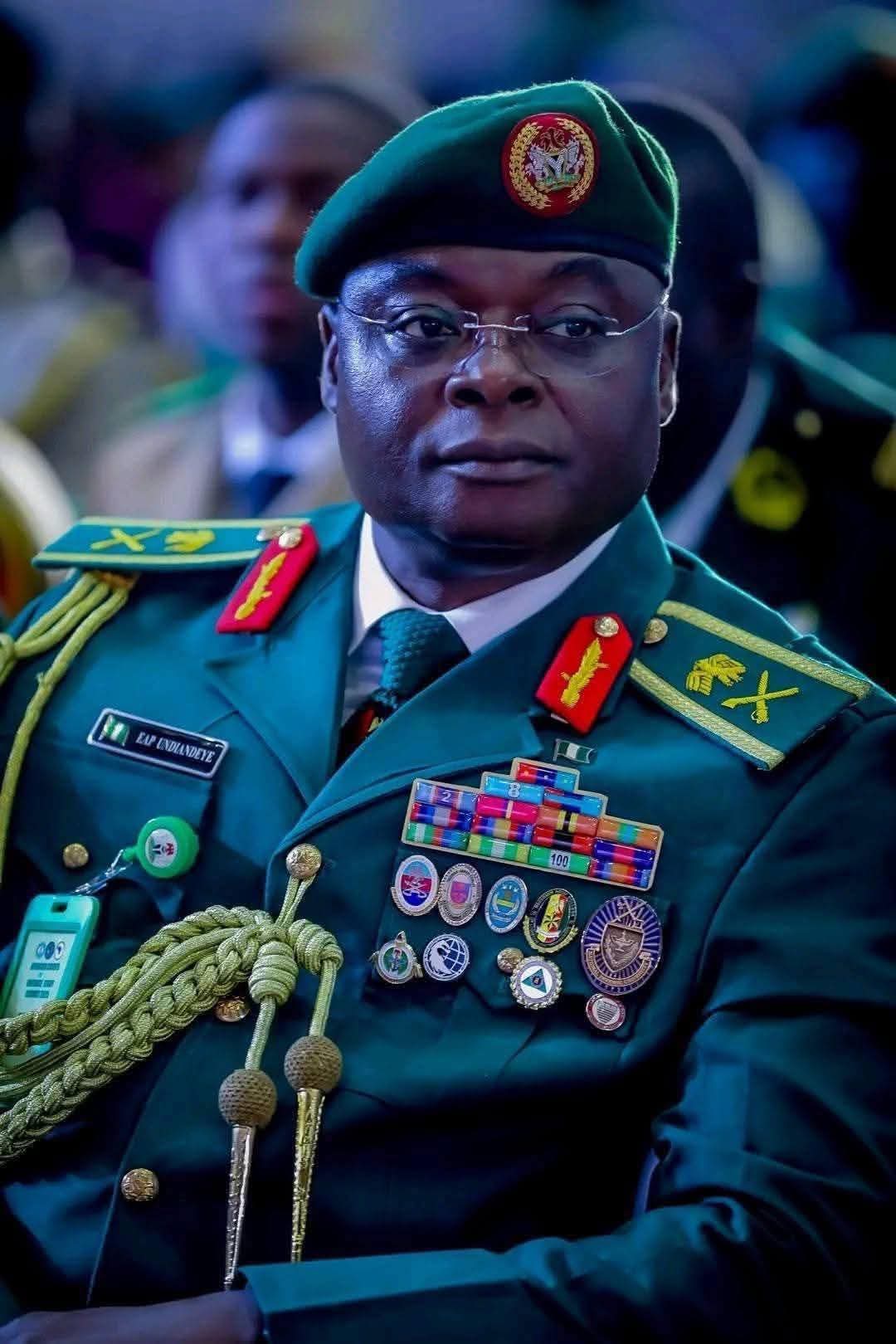
Military intelligence remains one of the most critical pillars of national security. Modern warfare is no longer defined only by battlefield strength but also by the ability to gather, analyze, and act on strategic information. In Nigeria, the responsibility for coordinating military intelligence operations rests with Emmanuel Aiyenigba Undiandeye, the Chief of Defence Intelligence.
As head of the Defence Intelligence Agency, Major General Undiandeye oversees the collection and analysis of intelligence relating to national security threats. His role involves supporting military decision-making, anticipating emerging risks, and providing strategic assessments to Nigeria’s defence leadership.
This article explores his early life, education, intelligence career, leadership philosophy, family background, and the role he plays in strengthening Nigeria’s defence intelligence capabilities.
Early Life and Background
Major General Emmanuel Aiyenigba Undiandeye was born in Cross River State, located in Nigeria’s South-South region. Growing up in a culturally diverse environment, he was exposed early to the importance of community cooperation and national unity.
His upbringing was shaped by strong family values emphasizing discipline, education, and public service. Like many young Nigerians growing up during periods of political and economic transformation, he developed an interest in national affairs and security matters.
Teachers and community members often described him as a focused and thoughtful student who demonstrated leadership qualities from a young age. These early traits would later influence his decision to pursue a career in the armed forces.
Education and Early Academic Development
Undiandeye began his formal education in Cross River State, where he attended primary and secondary schools known for strong academic traditions.
During his school years, he showed particular interest in subjects such as:
- history
- geography
- civic studies
- political science.
These subjects helped shape his understanding of global politics, national governance, and the strategic importance of intelligence in national defence.
His academic discipline and leadership potential eventually motivated him to pursue a career in military service.
Military Training at the Nigerian Defence Academy
Determined to serve Nigeria, Undiandeye applied to the Nigerian Defence Academy, the country’s premier military training institution.
Admission into the academy involves a rigorous process that tests academic ability, physical fitness, and leadership potential. After successfully passing the selection process, he joined the academy as a cadet.
Training at the Nigerian Defence Academy is designed to prepare officers for leadership roles within the armed forces. The curriculum includes:
- military strategy and tactics
- leadership development
- national security studies
- intelligence fundamentals
- weapons and operational training.
This comprehensive program equipped him with the foundational knowledge required for a career in defence intelligence.
Commissioning into the Nigerian Army
After completing his training at the academy, Undiandeye was commissioned as an officer in the Nigerian Army.
Like many officers beginning their careers, he initially served in operational roles that exposed him to the realities of military deployments and security operations across Nigeria.
These early experiences helped him understand the critical role intelligence plays in supporting battlefield decisions and protecting national interests.
Transition into Military Intelligence
During the course of his career, Undiandeye developed a strong interest in intelligence operations. Military intelligence involves collecting and analyzing information about potential threats, adversaries, and geopolitical developments.
His analytical mindset and strategic thinking made him well suited for intelligence roles within the armed forces.
Over time, he received specialized training in:
- intelligence analysis
- threat assessment
- strategic security planning
- international intelligence cooperation.
These skills prepared him for leadership responsibilities within Nigeria’s defence intelligence community.
Professional Development and Advanced Training
To strengthen his expertise in intelligence and security management, Undiandeye attended several advanced training programs both within Nigeria and internationally.
These programs focused on areas such as:
- defence intelligence operations
- counter-terrorism strategy
- global security studies
- military leadership and management.
Participation in these courses helped expand his understanding of international security trends and intelligence practices used by military organizations around the world.
Operational and Intelligence Experience
Throughout his career, Undiandeye served in various intelligence and operational positions within the Nigerian military structure.
These assignments involved responsibilities such as:
- monitoring security developments
- supporting military operational planning
- analyzing regional security threats
- coordinating intelligence sharing among security agencies.
His work contributed to strengthening Nigeria’s capacity to anticipate and respond to emerging security risks.
Rise Through the Military Ranks
Promotion within the Nigerian Armed Forces reflects a combination of professional competence, leadership ability, and years of service.
Undiandeye steadily rose through the ranks as his expertise in intelligence and strategic analysis became widely recognized.
During this period, he held several important roles within the defence establishment, contributing to policy development and intelligence coordination.
These positions allowed him to influence national security strategies and strengthen collaboration between military and civilian intelligence institutions.
Appointment as Chief of Defence Intelligence
After decades of military service and intelligence experience, Major General Undiandeye was appointed Chief of Defence Intelligence.
The role places him at the center of Nigeria’s military intelligence system. As head of the Defence Intelligence Agency, he is responsible for overseeing intelligence operations that support the country’s armed forces.
His responsibilities include:
- collecting and analyzing strategic intelligence
- providing security assessments to military leadership
- coordinating intelligence activities with other agencies
- supporting counter-terrorism and counter-insurgency operations.
The position requires not only analytical expertise but also strong leadership and strategic planning capabilities.
Role of the Defence Intelligence Agency
The Defence Intelligence Agency plays a vital role in Nigeria’s national security structure.
Its primary responsibilities include:
- gathering intelligence related to external threats
- analyzing geopolitical developments
- supporting military operations with actionable intelligence
- coordinating intelligence cooperation with international partners.
Under Undiandeye’s leadership, the agency continues to strengthen its capabilities in intelligence gathering and strategic analysis.
Leadership Philosophy
Major General Undiandeye’s leadership approach emphasizes professionalism, discretion, and strategic foresight.
Intelligence-Driven Security
He believes that accurate intelligence is essential for effective military operations and national security planning.
Inter-Agency Cooperation
Modern security challenges require cooperation between multiple agencies. Under his leadership, the Defence Intelligence Agency continues to strengthen coordination with other security institutions.
Continuous Learning
He encourages intelligence officers to pursue continuous training and education to keep pace with evolving global security threats.
Personal Life and Family
Like many senior intelligence officials, Major General Undiandeye maintains a highly private personal life.
He is married and has children, though details about his family remain largely confidential due to the sensitive nature of his work.
Family members and colleagues describe him as a devoted husband and father who values discipline, education, and humility.
Lifestyle and Personality
Undiandeye’s lifestyle reflects the structured discipline common among senior military officers.
His routine typically involves:
- early morning physical exercise
- strategic intelligence briefings
- meetings with defence officials
- analysis of security reports.
Colleagues often describe him as calm, analytical, and highly focused on his responsibilities.
Public Reputation
Within Nigeria’s defence community, Major General Undiandeye is widely respected for his expertise in intelligence and strategic planning.
His reputation is built on:
- professionalism
- strong analytical ability
- commitment to national security
- dedication to strengthening intelligence institutions.
Although intelligence leaders typically operate outside public attention, their work plays a crucial role in shaping national security strategies.
Challenges Facing Defence Intelligence
Nigeria faces a wide range of security challenges that require effective intelligence coordination.
These include:
- terrorism and insurgency
- transnational criminal networks
- cyber threats
- regional instability in West Africa.
Addressing these challenges requires advanced intelligence capabilities and international cooperation.
Strategic Outlook
Looking ahead, Major General Undiandeye’s leadership is expected to focus on strengthening Nigeria’s intelligence systems.
Key priorities include:
- improving intelligence analysis capabilities
- expanding technological surveillance systems
- strengthening international intelligence partnerships
- enhancing training for intelligence officers.
These initiatives aim to ensure that Nigeria remains capable of identifying and responding to emerging security threats.
Conclusion
Major General Emmanuel Aiyenigba Undiandeye’s career reflects decades of service in Nigeria’s military and intelligence community. From his early training at the Nigerian Defence Academy to his current role as Chief of Defence Intelligence, he has contributed significantly to strengthening Nigeria’s security architecture.
As security threats continue to evolve globally, the importance of effective intelligence leadership remains critical. Under his guidance, Nigeria’s Defence Intelligence Agency continues to play a key role in protecting national interests and supporting military operations.
Defense Careers
Who Is Vice Admiral Emmanuel Ikechukwu Ogalla? Full Biography of Nigeria’s Chief of Naval Staff

The Nigerian Air Force plays a critical role in the country’s security architecture, particularly in counter-insurgency operations, border surveillance, and rapid-response military missions. At the helm of this important institution is Hasan Bala Abubakar, the Chief of the Air Staff (CAS).
As the professional head of the Nigerian Air Force, Air Marshal Abubakar is responsible for overseeing the strategic direction, operational readiness, training, and modernization of the country’s air power capabilities. His leadership comes at a time when Nigeria’s military increasingly relies on air operations to support ground troops and address complex security threats across multiple regions.
This comprehensive article explores his early life, education, military career, leadership philosophy, personal life, and the strategic role he plays in Nigeria’s defence system.
Early Life and Background
Air Marshal Hasan Bala Abubakar was born in 1967 in Kaduna State, located in Nigeria’s North-West region. Kaduna has historically served as a major hub for military institutions and defence establishments in the country, which likely influenced his early exposure to military culture.
Growing up in a disciplined family environment, Abubakar developed strong values centered around education, hard work, and national service. His parents emphasized academic excellence and integrity, which shaped his early ambitions.
From a young age, he demonstrated curiosity about aviation and technology. The sight of aircraft flying from nearby airbases fascinated him, sparking an interest that would eventually guide his career path toward the air force.
Teachers and community members often described him as a quiet but determined student, known for his focus and commitment to achieving his goals.
Education and Military Training
Primary and Secondary Education
Abubakar began his formal education in Kaduna State where he attended primary school and later completed his secondary education. During his school years, he excelled academically and showed a strong interest in science subjects such as mathematics and physics.
These disciplines would later prove essential for a career in aviation and military technology.
Entry into the Nigerian Defence Academy
His ambition to serve Nigeria in the armed forces led him to apply to the Nigerian Defence Academy, the country’s premier military training institution located in Kaduna.
Admission into the academy requires passing rigorous academic tests, medical examinations, and physical fitness assessments. After successfully completing the selection process, Abubakar began his journey as a cadet.
At the academy, he underwent intensive training that included:
- military strategy and tactics
- leadership and command principles
- military law and ethics
- weapons training
- physical endurance programs.
The NDA training environment emphasizes discipline, resilience, and teamwork, shaping future officers capable of operating in demanding conditions.
Commissioning into the Nigerian Air Force
After completing his training, Abubakar was commissioned as an officer into the Nigerian Air Force in the early 1990s.
His specialization focused on aviation operations, which required extensive training in flight operations, aircraft systems, and aerial combat tactics.
He later attended advanced aviation training programs both within Nigeria and internationally, expanding his technical knowledge and operational experience.
Early Military Career
During the early stages of his military career, Abubakar served in several operational roles within the Nigerian Air Force. These assignments provided him with hands-on experience in aviation operations and airbase management.
His responsibilities during this period included:
- participating in flight missions
- assisting in operational planning
- supervising junior officers and technical personnel
- supporting logistics and aircraft maintenance coordination.
His strong work ethic and technical competence helped him gain recognition among senior officers.
Professional Development and Advanced Training
Like many senior air force officers, Abubakar participated in numerous professional development courses designed to prepare officers for higher leadership responsibilities.
These courses included training in:
- air warfare strategy
- defence management
- international military cooperation
- aviation safety and air operations planning.
Such training programs helped him build a comprehensive understanding of modern air power and its role in contemporary military operations.
Operational Experience
Throughout his career, Abubakar served in multiple operational commands and administrative positions across the Nigerian Air Force.
These roles exposed him to the complexities of managing air operations across Nigeria’s vast territory.
Air Operations Command
One of the most important aspects of his career involved coordinating air missions designed to support ground troops engaged in counter-insurgency operations.
Air operations have become a crucial component of Nigeria’s security strategy, particularly in areas where terrain makes ground operations difficult.
Counter-Insurgency Missions
In the past decade, the Nigerian Air Force has played a significant role in operations against insurgent groups in the northeast of the country.
Abubakar’s involvement in operational planning helped strengthen the integration between air and ground forces, enabling more effective military responses to security threats.
Rise Through the Ranks
Over the years, Abubakar rose steadily through the ranks due to his performance and leadership capabilities.
His promotions reflected his growing responsibilities within the air force, eventually leading him to senior command roles.
During this stage of his career, he served in several strategic positions including:
- command leadership roles at air bases
- operational planning units
- training institutions responsible for preparing new air force officers.
These experiences broadened his understanding of both operational and administrative aspects of military leadership.
Appointment as Chief of the Air Staff
After decades of service in the Nigerian Air Force, Abubakar was appointed Chief of the Air Staff, placing him in charge of the entire air force.
The position carries major responsibilities, including:
- overseeing air operations across the country
- managing personnel and aircraft fleets
- supervising training programs
- developing long-term air power strategies.
His appointment was widely seen as recognition of his professional experience and dedication to military service.
Leadership Philosophy
Air Marshal Abubakar’s leadership approach is based on several key principles.
Operational Efficiency
He believes that air power must be deployed strategically to achieve maximum impact in modern military operations.
Technological Advancement
Modern warfare relies heavily on advanced technology. Under his leadership, the air force has prioritized the modernization of aircraft and surveillance systems.
Personnel Development
He has consistently emphasized the importance of training and professional development for air force personnel.
Modernization Efforts
Since assuming office, Abubakar has overseen initiatives aimed at strengthening the operational capabilities of the Nigerian Air Force.
These efforts include:
- acquisition of new aircraft
- improved pilot training programs
- expansion of aerial surveillance systems
- enhanced cooperation with other branches of the armed forces.
These initiatives aim to ensure that the air force remains capable of responding to Nigeria’s evolving security challenges.
Role in National Security
Air power plays an increasingly important role in Nigeria’s security strategy. Aircraft can quickly deploy troops, conduct surveillance missions, and strike hostile targets when necessary.
Under Abubakar’s leadership, the Nigerian Air Force continues to support operations aimed at combating:
- insurgency
- banditry
- illegal mining activities
- cross-border criminal networks.
His strategic focus has been on improving coordination between the air force and other security agencies.
Personal Life and Family
Despite his prominent role in national security, Air Marshal Abubakar maintains a relatively private personal life.
He is married and has children, though details about his family remain largely undisclosed in order to protect their privacy and security.
Family members describe him as a devoted husband and father who values discipline and education.
Lifestyle and Personality
Like many senior military officers, Abubakar maintains a structured lifestyle shaped by decades of service.
His routine often includes:
- early morning physical exercise
- operational briefings
- meetings with senior officers
- strategic planning sessions.
Colleagues describe him as calm, analytical, and focused on long-term institutional development.
Public Image and Professional Reputation
Within Nigeria’s defence community, Abubakar is widely regarded as a competent and professional officer.
His reputation is built on:
- technical expertise in aviation
- strong leadership skills
- commitment to national security
- emphasis on professional military standards.
International defence partners also view him as an experienced officer capable of strengthening military cooperation.
Challenges Facing the Nigerian Air Force
Despite progress in modernization, the Nigerian Air Force continues to face several challenges.
These include:
- maintaining aging aircraft fleets
- expanding training capacity for pilots
- improving surveillance coverage across Nigeria’s vast territory
- ensuring sustainable funding for defence programs.
Addressing these challenges requires long-term planning and continued government support.
Strategic Outlook
Looking ahead, Abubakar’s leadership is expected to focus on strengthening Nigeria’s air power capabilities.
Key priorities include:
- enhancing surveillance technology
- improving joint military operations
- expanding pilot training programs
- increasing the operational readiness of aircraft fleets.
These measures aim to ensure that the Nigerian Air Force remains capable of responding effectively to emerging security threats.
Conclusion
Air Marshal Hasan Bala Abubakar’s career reflects decades of dedication to Nigeria’s defence and aviation development. From his early years as a cadet to his current position as Chief of the Air Staff, he has built a reputation as a disciplined officer and strategic thinker.
As Nigeria continues to face evolving security challenges, his leadership will play a crucial role in shaping the operational direction of the Nigerian Air Force and strengthening the country’s ability to defend its airspace and support national security operations.
 Crime & Conflict2 days ago
El-Rufai Faces Fresh Allegations as Witness Tells Court of $600,000 EFCC Payment Plan
- Breaking Security News2 days ago
INEC Explains Why Pantami, Adebutu Were Omitted From 2027 Governorship Candidates List
- Terrorism & Insurgency2 days ago
Ribadu Raises Alarm as Terrorists Turn to AI, Cryptocurrency and Drones
- Breaking Security News2 days ago
2027 Elections: Timi Frank Asks Trump to Send US Delegation to Nigeria
- Crime & Conflict8 hours ago
₦110.4bn Fraud Trial: Witness Explains ₦1.425bn Forex Transactions Linked to Yahaya Bello Case
- Terrorism & Insurgency7 hours ago
Bandits Demand ₦500 Million Ransom for Pregnant Woman Abducted in Kaduna
- Terrorism & Insurgency7 hours ago
Nigerian Troops Overrun Lakurawa Base in Sokoto, Kill Fighters and Recover Weapons
- Crime & Conflict8 hours ago
Lagos Court Sentences Six Men to Two Years in Prison for Assaulting KAI Officers


